

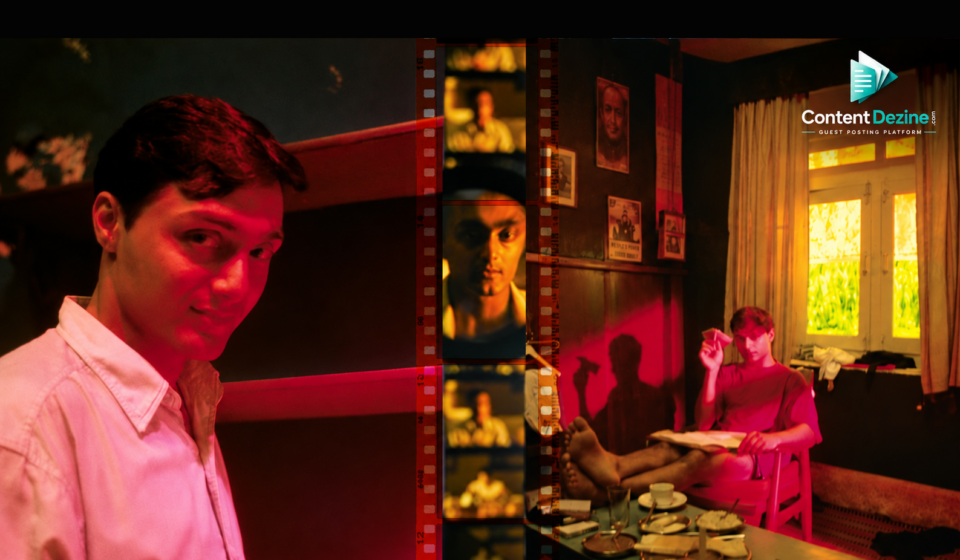
The Reconstruction of English, August: A Masterpiece of a Film Still Relevant to Indian Bureaucracy

Author: Rudranath Chakraborty
I watched English, August on a television screen in Kolkata in 1996. I did not know then that I was watching a film that would stay with me for decades. What caught my attention immediately was its strange combination of subtle humor, boredom, blank loneliness and sharp observation on Indian bureaucratic structure. It was one of those films that did not treat bureaucracy with the usual seriousness. Instead it looked at it from inside the system and found an unspeakable absurdity in its routines, attitudes and contradictions. There was something refreshing about this kind of satire of Indian society.
Also Rahul Bose, then making his screen debut, immediately caught my eye. His restrained performance as Agastya Sen made a character who could easily have become irritating and at the same time, strangely fascinating. Years later, seeing the film discussed again and eventually restored made that old television memory feel remarkably relevant.
From Upamanyu Chatterjee’s Novel to the Screen
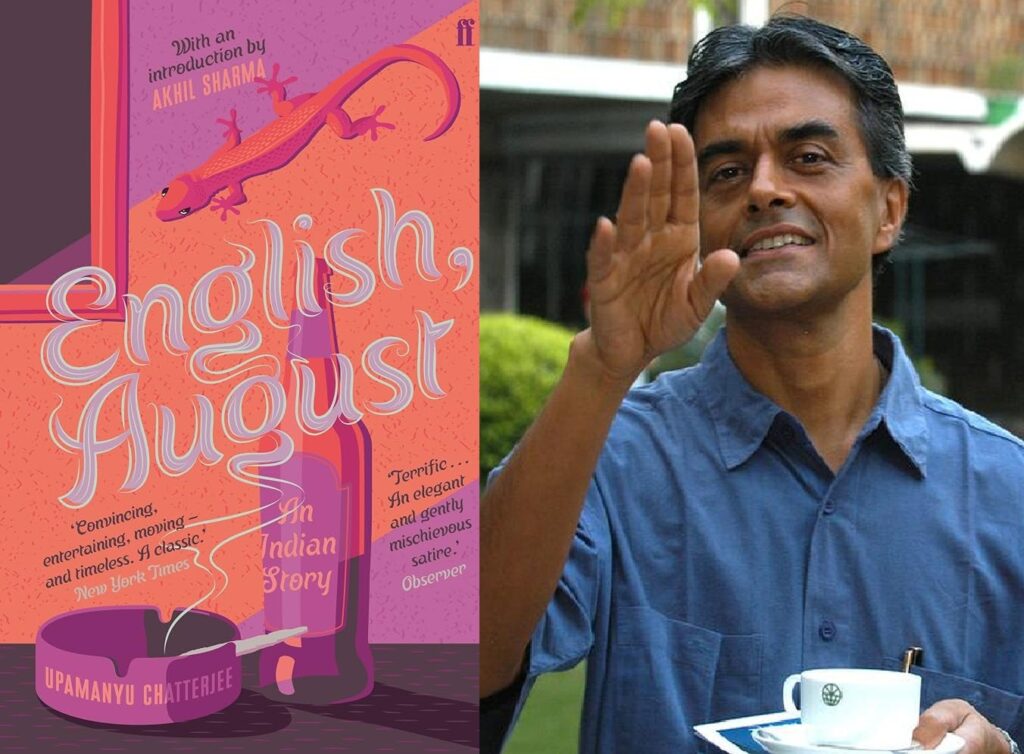
Dev Benegal’s 1994 film was adapted from Upamanyu Chatterjee’s celebrated 1988 novel English, August: An Indian Story. The book follows Agastya Sen, a young and westernized civil servant who is posted to the fictional small town of Madna during his administrative training and discovers the blockages in the rural development due to administrative boundaries.
Benegal did not simply attempt to transfer the novel page by page to cinema. He developed his own cinematic language for Chatterjee’s material. In his account of the screenplay, Benegal explained that the shooting script continued to evolve during production and editing. Chatterjee himself observed that the film was effectively being written in the cutting room.
The result was deliberately different from conventional Indian cinema of its period. Benegal described the visual approach as “expressionistic realism” and used color, sound, performance and editing to translate Agastya’s interior world into an external cinematic experience.
Rahul Bose and a Remarkable Debut
Rahul Bose’s Agastya was central to the film’s unusual character. Rather than playing a conventional heroic civil servant, Bose portrayed a young man who was detached, bored, privileged, confused and frequently uncomfortable with the world around him.
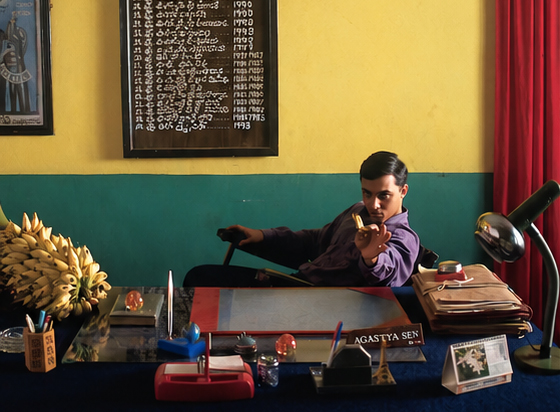
That was a considerable challenge for a debut performance. As Bose later recalled, much of the role involved making boredom watchable without making the audience bored. Contemporary and retrospective responses have continued to highlight the deadpan quality of his performance.
The film attracted substantial international recognition. It received the Special Jury Prize at the 1994 Torino International Festival of Young Cinema and two awards at the Festival des 3 Continents in Nantes, including the Silver Montgolfière and the award for Best First Feature.
It subsequently won the National Film Award for Best Feature Film in English.
A Satire of Bureaucracy and Society
At its heart, English August Indian bureaucracy is not simply about government offices. It is about the distance between institutions and the people those institutions are supposed to serve.
Agastya enters the administrative system with education, privilege and an urban outlook. Yet his posting exposes him to a world where official authority can coexist with inefficiency, hierarchy and everyday absurdity.
The film observes the bureaucratic machinery rather than turning it into a simple villain. Files, instructions, permissions, senior officers and local administration become part of a system in which the language of governance can sometimes appear disconnected from ordinary life.
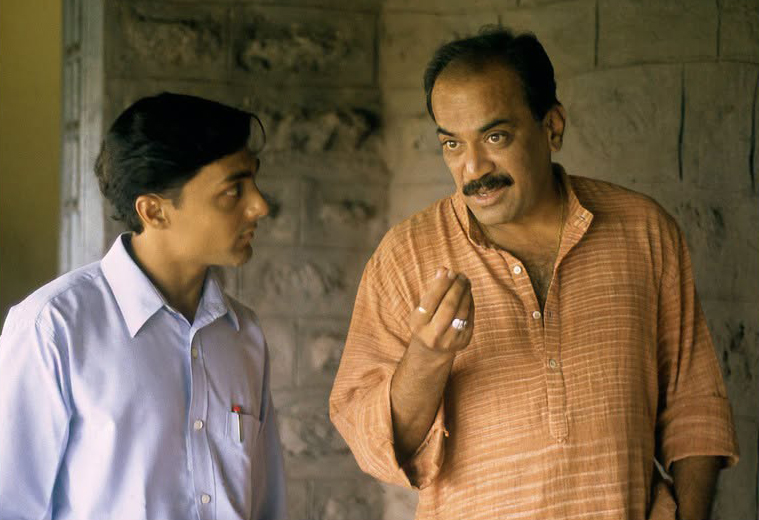
This is where the film’s satire becomes significant. The problem is not merely that individual officials can be lazy or eccentric. The deeper observation concerns a structure in which power and responsibility do not always operate at the same level.
That criticism has not entirely disappeared with time. Modern Indian administration has undergone enormous technological and institutional changes. Digital services, online applications and electronic records have transformed many interactions between citizens and the state. Yet the film’s broader questions about institutional hierarchy, official power and the gap between policy and lived reality remain open to interpretation.
That continuing relevance has also been noted in contemporary discussions around the restoration. Benegal has suggested that Agastya’s alienation can still speak to younger audiences even though today’s isolation exists in a radically more connected digital environment.
When the Film Almost Disappeared

The story of English August film restoration is almost as remarkable as the film itself.
For years the movie was effectively unavailable. Its original 35mm negative had deteriorated severely because of poor storage and was eventually found to be unusable. For a film that had already acquired cult status this was a devastating loss.
Then came an extraordinary discovery in 2020. A clean 35mm release print was found at the National Film Archive of India. Another surviving print had been retained by Benegal and later donated to the Film Heritage Foundation. These materials provided the foundation for bringing the film back.
Restoration By Film Heritage Foundation and Shivendra Singh Dungarpur
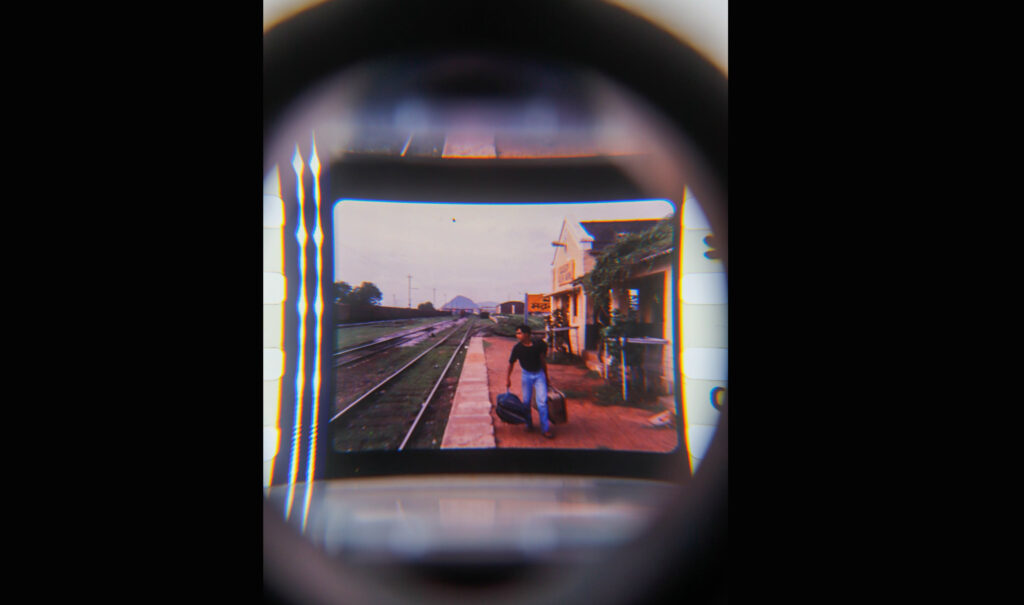
The Film Heritage Foundation took on the enormous preservation task under the leadership of filmmaker and archivist Mr. Shivendra Singh Dungarpur.
The restoration team could not simply scan the original negative because it was beyond usable condition. Instead, conservators worked with the surviving 35mm prints. The soundtrack presented another challenge, with surviving digital audio tapes also becoming important to reconstructing the film’s sound. Restoration work was carried out at L’Immagine Ritrovata in collaboration with the original filmmakers and key members of the production team.
Dungarpur’s role was therefore not simply administrative. The project required archival investigation, comparison of surviving elements and painstaking decisions about how the restored film should look and sound.
The completed restoration became a 4K reconstruction of a film that had once appeared destined to remain largely inaccessible.
A Second Life at Venice
The reward came in September 2026 when the restored English, August returned to the international film arena through the Venice Classics program at the 83rd Venice International Film Festival.
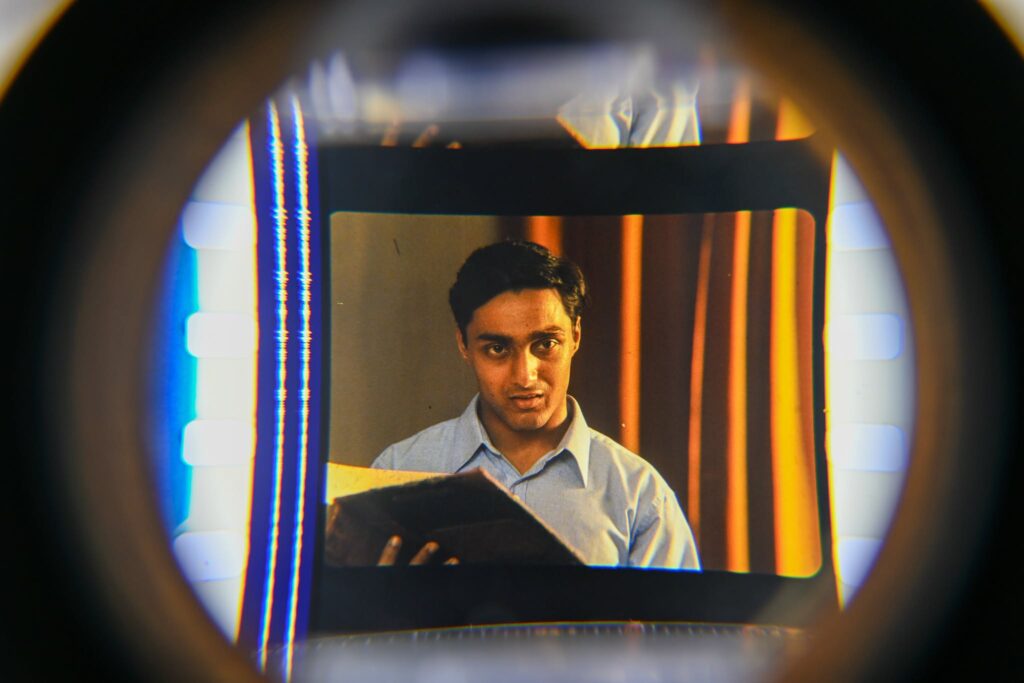
The official Venice program lists Film Heritage Foundation as the restorer and records the film’s 9 September screening at Sala Corinto. A further screening took place on 10 September.
The response from contemporary viewers has also demonstrated that the film has not become merely a historical curiosity. Recent audience reactions have highlighted its deadpan humour, screenplay, dialogue, Rahul Bose’s performance and distinctive 1990s aesthetic.
That renewed attention matters because the film’s questions have not become obsolete. The technology around Indian governance has changed. The language of administration has changed. Indian society itself has changed enormously. Yet the questions surrounding authority, belonging, privilege, public service and institutional distance remain available for a new generation to examine.
Why Films Like English, August Must Be Saved

The reconstruction of English, August demonstrates why film restoration is more than an exercise in nostalgia.
A film is also a record of how a country once looked, spoke, argued and imagined itself. When an important film disappears, part of that cultural memory disappears with it.
The restored English, August now gives audiences another opportunity to examine the India of the 1990s while simultaneously viewing it from the perspective of 2026. That double vision is perhaps its greatest strength.
I first encountered the film on a television screen in Kolkata in 1996. More than three decades after its original release, it has traveled from a television memory to an international restoration screen in Venice.
And perhaps that is the most satisfying part of the story. Some films do not really disappear. They wait for someone to find them.
Image courtesy: From the Social Media of Film Heritage Foundation