

Written by Rudranath Chakraborty
Imagine spending weeks preparing for Durga Puja only to discover that your star singer has been persuaded to perform at your neighbour’s house. Worse still, the neighbour has paid handsomely for the privilege and is probably enjoying every moment of your disappointment. Today, this might sound like a celebrity booking controversy. In nineteenth-century Kolkata, however, musical rivalries among wealthy Bengali families could become legendary stories of pride, prestige and artistic one-upmanship.
At the heart of this fascinating cultural world was Bengali Tappa, a semi-classical singing style celebrated for its intricate vocal movements, rapid musical flourishes and expressive lyrics. It was more than entertainment. For the wealthy households of colonial Bengal, a memorable Tappa performance could add considerable prestige to a Durga Puja celebration. And when musical excellence became a competition between powerful patrons, the results could be as dramatic as a theatre performance.
Bengali Tappa: A Musical Treasure with a Distinctive Voice
To understand this legacy, we must first appreciate the music itself. Tappa originated in the musical traditions associated with Punjab and was later developed within North Indian classical music. In Bengal, Ramnidhi Gupta, popularly known as Nidhu Babu, transformed the style during the late eighteenth century into something distinctly Bengali.
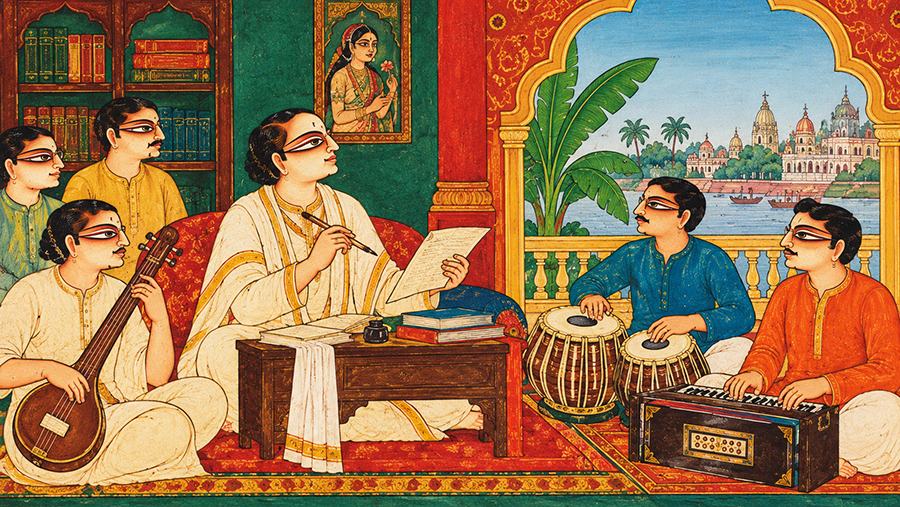
His achievement was remarkable. He brought the expressive possibilities of Tappa into Bengali-language compositions, combining poetic sentiment with demanding vocal ornamentation. The resulting music was lively, technically challenging and emotionally rich.
Tappa is particularly known for its rapid clusters of notes, often described as zamzamas, alongside intricate taans that require extraordinary breath control and vocal flexibility. A singer must make these movements sound spontaneous even though they demand considerable skill and discipline.
In other words, Tappa is not simply a case of singing quickly and hoping for the best. Every musical flourish has a purpose. Its beauty lies in the balance between technical mastery and emotional expression.
Durga Puja and the Golden Age of Musical Gatherings
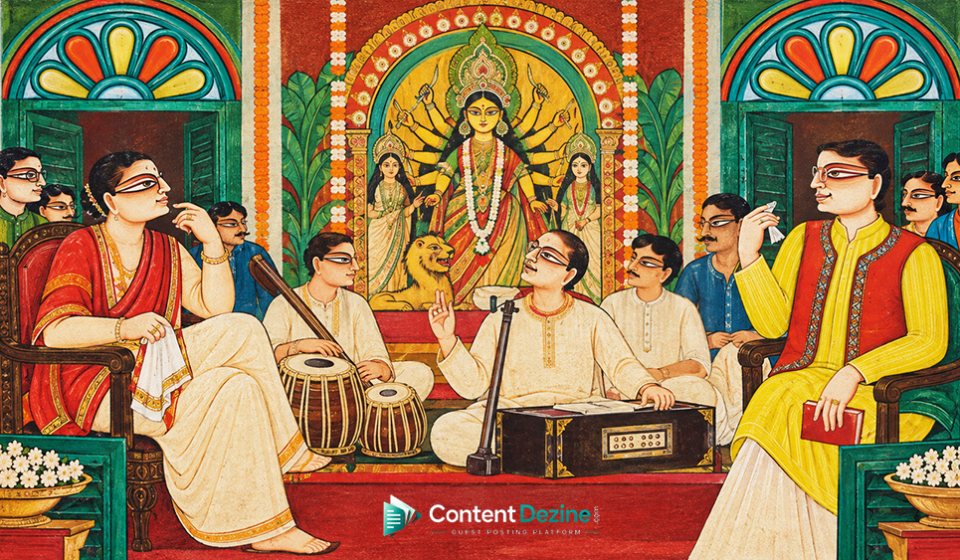
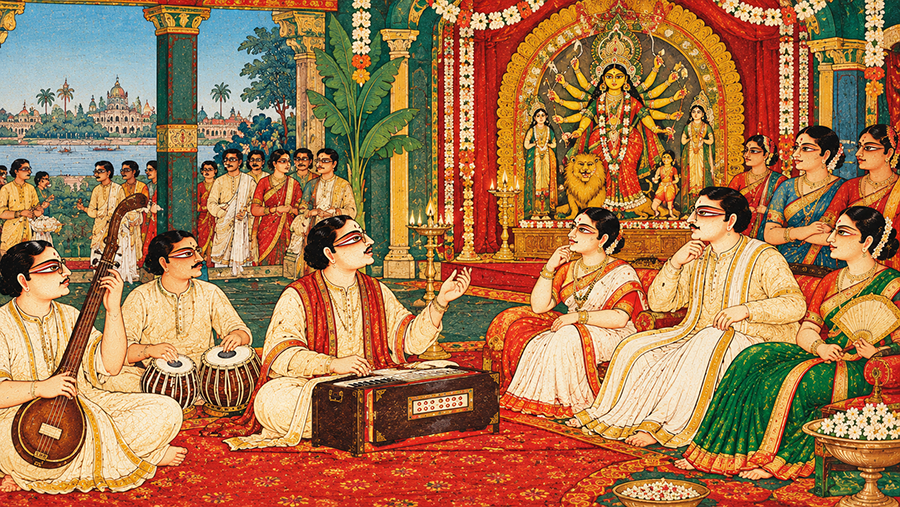
During the nineteenth century, Durga Puja in Kolkata was closely associated with the grand celebrations organised by wealthy landowners and aristocratic families. Their magnificent mansions hosted elaborate rituals, lavish feasts and musical gatherings that attracted distinguished performers and influential guests.
These gatherings, often described as jalsas, provided an important platform for classical and semi-classical musicians. Securing a celebrated singer could enhance a host’s reputation almost as much as an impressive courtyard or a beautifully decorated Durga idol.
This was the world in which Tappa songs during Durga Puja acquired a special cultural significance. Music offered a way to express devotion while also demonstrating refinement, wealth and social standing.
Yet the genre was not limited to aristocratic entertainment. Tappa also became closely connected with Puratani Bangla Gaan, a broader tradition of older Bengali songs that preserved the musical and literary sensibilities of another era.
The result was a distinctive cultural legacy in which artistic excellence and social prestige often shared the same stage.
Agamani Songs: When Uma Comes Home
The emotional connection between Tappa and Durga Puja becomes especially meaningful through Agamani songs. These compositions celebrate the anticipated homecoming of Uma, the daughter of Menoka and Giriraj, from her husband’s home in Mount Kailash.
For Bengali families, the story carries an intimate emotional resonance. Durga is not merely a powerful goddess arriving to defeat evil. She is also a beloved daughter returning to her maternal home for a few precious days.
Songs such as Nidhu Babu’s Giri Ki Achal Hole capture the longing and affectionate impatience surrounding this reunion. The lyrics address Giriraj, urging him to overcome his mountain-like firmness and bring Uma home.
The farewell tradition of Vijaya songs offers the other side of this emotion. As Durga prepares to leave on Dashami, joy gives way to sorrow.
Tappa’s expressive vocal movements suit these feelings beautifully. Its delicate turns and trembling phrases can communicate longing, affection and grief without sacrificing musical sophistication.
The Scandalous Tappa Affair: When a Singer Changed Sides
Now comes the story that gives this musical history an especially entertaining twist. The tale centres on two prominent figures associated with the competitive world of colonial Kolkata: Raja Radhakanta Deb of the celebrated Sobhabazar Rajbari and Ashutosh Deb, popularly known as Chhatu Babu.
According to a popular anecdote, wealthy patrons competed fiercely to secure the finest musicians for their festive gatherings. The more prestigious the performer, the greater the host’s social standing. Naturally, such a system left plenty of room for wounded pride and spectacularly expensive gestures.
The story goes that during a Durga Puja in the 1830s, Chhatu Babu learned that Radhakanta Deb had arranged for a celebrated Tappa maestro to perform at Sobhabazar Rajbari. Determined to outshine his rival, Chhatu Babu allegedly sent intermediaries to intercept the musician and offered him three times the original fee in gold coins.
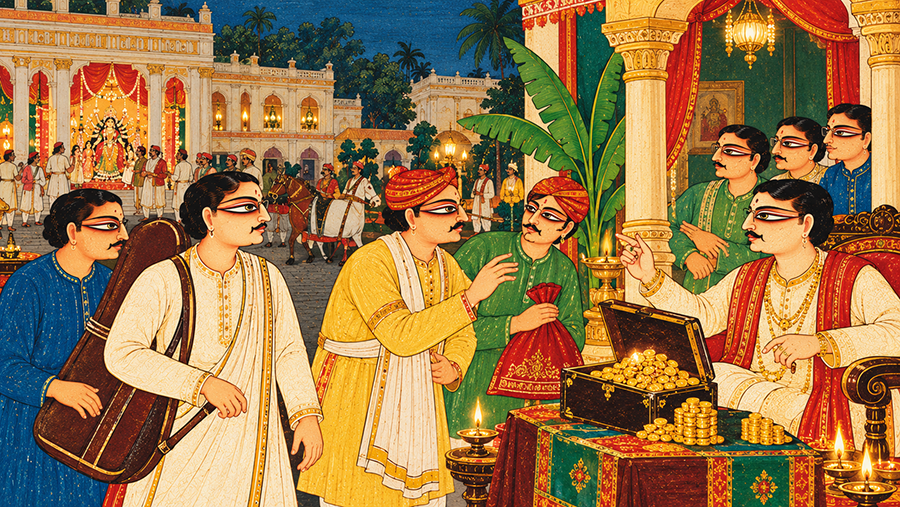
There was reportedly just one condition: the singer had to perform at Chhatu Babu’s mansion instead.
Imagine the scene at Sobhabazar. The courtyard is ready, the guests are waiting and everyone expects a musical evening worthy of the occasion. But the star performer never arrives. A little later, the unfortunate host discovers that his prized attraction has been persuaded to entertain his rival instead.
If the anecdote is accurate, this was more than a scheduling mishap. It was an expensive lesson in the competitive economics of entertainment.
The tale becomes even more colourful with its account of a supposedly satirical performance at Chhatu Babu’s residence. The music allegedly carried a pointed message suggesting that artistic appreciation depended less on ancient titles than on the ability to pay generously.
One can almost imagine the audience enjoying the performance while pretending not to understand the insult. In aristocratic society, a musical gathering could apparently deliver a sharper sting than a direct argument.
The story further claims that Radhakanta Deb retaliated through satirical songs aimed at his rival’s family background. Thus, Tappa and related forms of musical satire became part of an alleged exchange of cultural barbs between wealthy patrons.
An important historical distinction: This colourful account should be treated as a reported anecdote rather than a fully verified historical event. The specific performance, payment and retaliatory compositions require reliable documentary evidence. Nevertheless, the story captures the atmosphere of status-conscious patronage associated with elite musical culture in colonial Kolkata.
From Aristocratic Rivalries to a Lasting Musical Legacy
Beyond the gossip, the story highlights something important about Bengali Tappa music history. Music was not merely a decorative addition to religious festivities. It helped shape cultural identity, artistic patronage and the social life of the Bengali elite.
The tradition also survived through dedicated performers who kept older compositions alive. Ramkumar Chatterjee became particularly associated with Puratani Bangla Gaan and traditional Tappa-style singing. His recordings helped introduce generations of listeners to a repertoire that might otherwise have remained confined to private gatherings and specialist audiences.
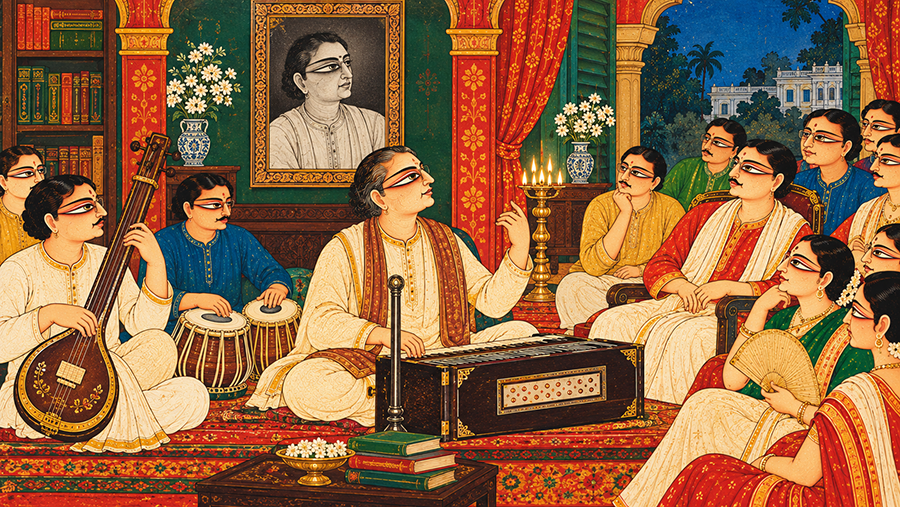
Compositions such as Giri Ki Achal Hole continue to demonstrate how technical brilliance can coexist with simple human emotions. The longing of a mother for her daughter needs no elaborate explanation. A skilled singer gives that emotion its own musical language.
The legacy of traditional Agamani songs of Durga Puja therefore reaches beyond the festival calendar. These songs preserve a distinctive way of understanding Durga as both a divine presence and a daughter returning home.
Today, public pandals, contemporary arrangements and amplified music dominate much of the festive soundscape. Yet the quieter traditions of Puratani songs and Tappa remain valuable reminders of Bengal’s layered musical past.
Why Tappa Still Deserves a Place in Durga Puja
The beauty of Tappa lies in its ability to make complexity feel effortless. Its intricate vocal turns demand years of training, while its emotional themes remain accessible to ordinary listeners.
The historical rivalry anecdote may entertain us with its expensive musical manoeuvres and bruised aristocratic egos. But the music itself deserves more attention than the scandal surrounding it.
After all, the patrons may have competed over singers, invitations and prestige. The lasting achievement belonged to the composers and performers who created something worth remembering.
Perhaps that is the most satisfying ending to this story. Wealth can secure a performance for an evening, and rivalry can turn a festive gathering into a memorable controversy. But neither money nor mischief can manufacture genuine artistic greatness.
Tappa has endured because it offers something more enduring than social competition: a remarkable fusion of musical discipline, poetic expression and Bengali cultural memory. When Durga returns home each autumn, this heritage deserves to be welcomed alongside the familiar rhythms of the dhak.
The continuing relevance of Bengali Tappa music history and the emotional depth of traditional Agamani songs of Durga Puja remind us that preserving musical heritage means keeping both its artistry and its stories alive.