
The Vanishing Sounds of Durga Puja: Can Traditional Dhak Culture Survive the Age of Electronic Music?

Written by: Rudranath Chakraborty
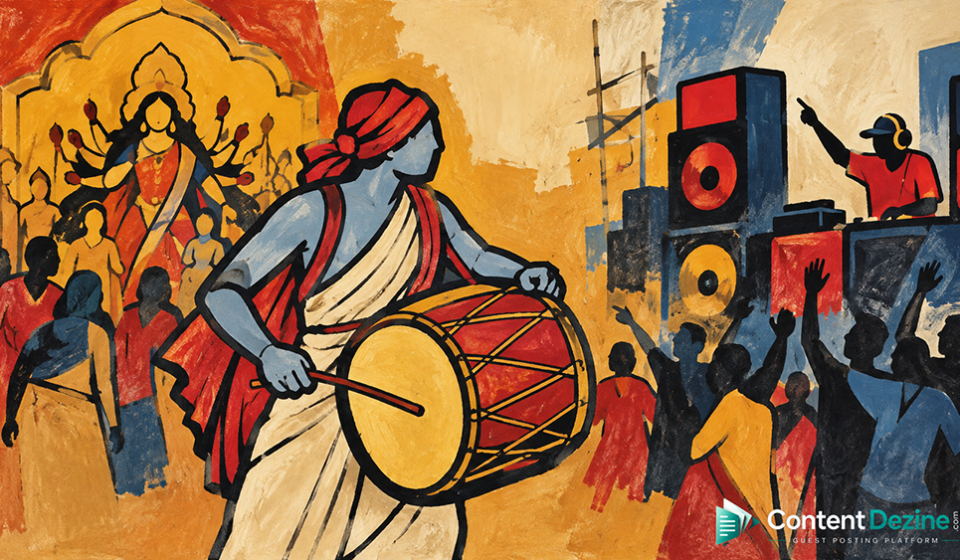
For generations the unmistakable rhythm of the dhak has announced the arrival of Durga Puja in Bengal. Its deep resonant beats accompany the arrival of the goddess the excitement of pandal hopping and the emotional moments of ritual worship. Yet the soundscape of the festival has changed considerably. Amplified music electronic dance tracks and powerful loudspeakers have increasingly competed with traditional percussion for public attention.
The debate has gained fresh importance during Durga Puja 2026 following the West Bengal government’s announcement prohibiting DJ music during Puja celebrations and idol immersion processions. The decision has reopened an important cultural question: can the dhak retain its central place when modern entertainment increasingly shapes public celebrations?
The Dhak Is More Than a Musical Instrument
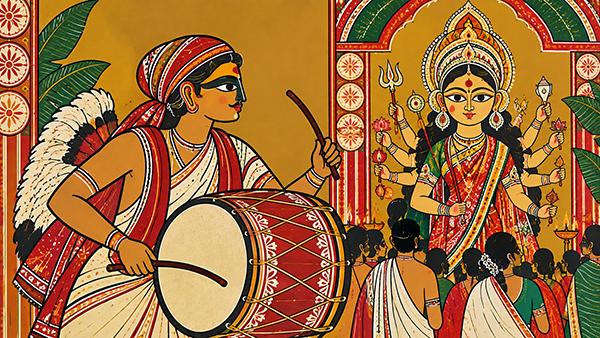
The dhak is not simply a drum played to entertain crowds. It is an integral part of Bengal’s cultural identity and religious atmosphere. Played with curved sticks and carried by skilled performers known as dhakis it produces a distinctive rhythm that connects worshippers with the rituals of the festival.
From the energetic beats accompanying dhunuchi naach to the solemn atmosphere of Sandhi Puja the instrument has a role that electronic recordings cannot fully reproduce. Its rhythm changes with the occasion and the performance of the drummer brings a human quality to the celebration.
The tradition also supports rural livelihoods. Many dhakis travel from villages across West Bengal to perform at urban pandals during the festive season. Their earnings can provide an important source of income for their families. Preserving dhak culture therefore means protecting a living artistic tradition as well as a community’s economic security.
Readers interested in the instrument’s cultural significance can explore this guide to dhak and dhaki traditions.
How Electronic Music Reshaped the Festival Soundscape
The growing popularity of electronic music has transformed the atmosphere around many community celebrations. Large sound systems and bass-heavy tracks can turn immersion processions into high-energy street events. For younger participants this music may offer excitement and a contemporary expression of collective celebration.
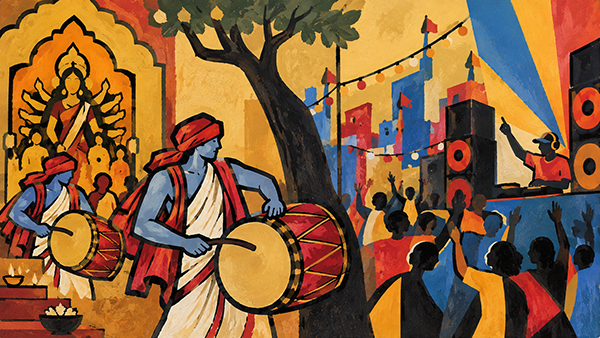
However the change becomes problematic when electronic sound overwhelms traditional percussion and ritual music. In some settings the dhak is reduced to a brief performance before recorded tracks take over. The drummer may remain physically present without receiving the attention or recognition that the tradition deserves.
The problem is not necessarily modern technology itself. Microphones and carefully positioned speakers can help a dhaki reach a larger audience. The real concern arises when volume becomes more important than musical quality and when every celebration feels compelled to compete with its neighbours.
The evolving soundscape of Durga Puja in Kolkata reflects a wider tension between cultural continuity and changing entertainment preferences. A festival can welcome new musical influences without allowing its oldest sounds to disappear beneath them.
The 2026 DJ Ban: Cultural Protection or Noise Control?
In September 2026 West Bengal Chief Minister Suvendu Adhikari announced a prohibition on DJ music during Durga Puja celebrations and idol immersion processions. The announcement formed part of the government’s wider guidance for the festival. The stated emphasis included preserving traditional character and maintaining decorum. The official West Bengal government announcement provides a reference for the guidelines.
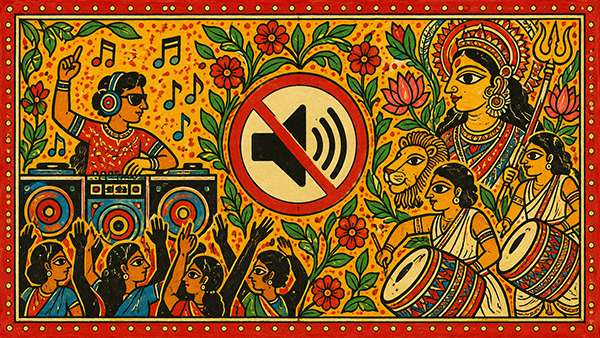
The restriction has encouraged discussion about what constitutes appropriate festival music. Supporters argue that reducing DJ-led celebrations creates more room for traditional percussion and devotional music. Others have questioned whether a broad prohibition on DJ music adequately distinguishes between the profession of DJing and the problem of excessive sound.
This distinction matters. A DJ performing at a controlled volume is not automatically responsible for noise pollution. Equally a traditional drum performance can become disruptive if sound levels and timings are ignored. The most effective approach should protect cultural practices while applying clear and fair rules to public sound.
The controversy surrounding the 2026 DJ music restrictions illustrates why the implementation of such rules matters as much as their announcement.
Loud Electronic Music and Its Wider Consequences
Excessive sound is not merely an aesthetic problem. Prolonged exposure to high noise levels can cause discomfort interfere with sleep and contribute to stress. Children older people and individuals with sound sensitivity may find extremely loud celebrations particularly difficult. Residents living near major pandals and procession routes can also face repeated disruption during the festival.
Noise pollution can affect animals as well. Sudden and intense sounds may frighten pets and disturb urban wildlife. When multiple sound systems operate simultaneously the cumulative impact can become more significant than any single event suggests.
Responsible celebrations should therefore combine cultural enthusiasm with sensible sound management. Organisers can follow applicable noise regulations maintain reasonable volume levels and avoid unnecessary amplification late at night. Traditional instruments deserve space to be heard clearly rather than being used as another layer in an overwhelming wall of sound.
Can Dhakis Find a Sustainable Future?
The survival of dhak culture cannot depend on restrictions alone. Dhakis need fair payment reliable bookings and greater visibility within the festival’s commercial and cultural planning. Puja committees can prioritise live performances during important rituals and give traditional musicians prominent positions in processions.
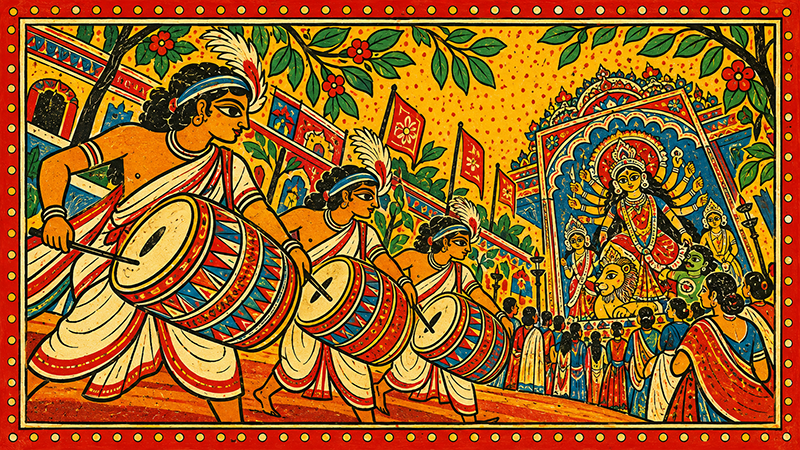
Schools cultural organisations and community groups can organise workshops that introduce younger generations to the instrument. Recorded archives and digital platforms can document different regional rhythms and help musicians reach audiences beyond the festive season. Such initiatives would allow technology to support tradition instead of replacing it.
Organisers could also develop balanced programmes that include contemporary music at appropriate times while reserving sacred and ceremonial moments for traditional percussion. This would acknowledge changing tastes without treating cultural heritage as an obstacle to entertainment.
Conclusion: Let the Dhak Remain the Heartbeat of Puja
The future of Bengal’s festival music depends on the choices made by organisers performers audiences and policymakers. The restrictions announced for Durga Puja 2026 create an opportunity to reconsider how sound is used in public celebrations. Yet meaningful cultural preservation requires more than banning one form of music.
The dhak must be heard because it matters to the rituals the musicians who sustain it and the generations who recognise its rhythm as the beginning of Puja. Electronic music can have its place in a modern celebration but it should not erase the distinctive sound that gives the festival much of its emotional character.
If Bengal can combine responsible sound management with fair support for traditional performers the dhak need not become a vanishing sound. It can remain a living expression of the festival’s heritage.