



Written by Rudranath Chakraborty
The announcement that Anne Carson has won the 2026 Nobel Prize in Literature is not simply a celebration of another distinguished writer. It is recognition of a literary career that has persistently questioned what literature is allowed to be. The Swedish Academy honoured Carson for her “bold and inventive oeuvre that, in playful dialogue with the classical tradition, has created new forms for contemporary literature.” At 76, the Canadian poet, essayist, classicist and translator has received the world’s most prestigious literary honour for work that refuses to remain inside conventional categories.
A Nobel Prize for Crossing Boundaries
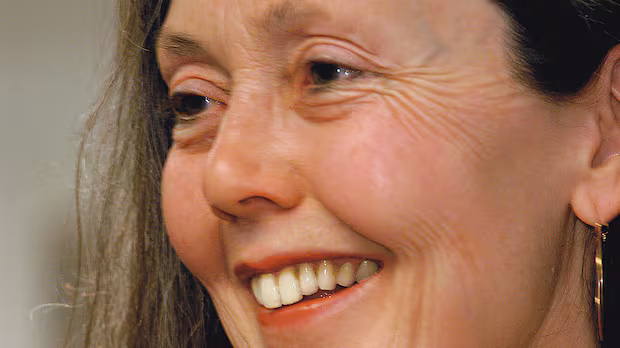
The 2026 Nobel Prize in Literature is particularly appropriate for Carson because her writing has always existed between forms. Poetry can become essay, scholarship can become autobiography, translation can become an act of reinvention and mythology can suddenly acquire the emotional temperature of contemporary life.
The Nobel committee’s recognition focuses on precisely this quality. Carson does not simply modernise ancient texts. She puts the ancient and the modern into an active conversation. Homer, Sappho and Greek tragedy may appear beside Virginia Woolf, Marilyn Monroe, modern art, popular culture or fragments from ordinary life. The result is literature that feels simultaneously scholarly and unpredictable.
Anders Olsson, chair of the Nobel literature committee, described Carson’s work as centred on “the intersection between the philologist’s obsession with words and the poet’s desire for new meaning.” That sentence offers an unusually good introduction to her literary method.
From Toronto to the Classical World

Carson was born in Toronto in 1950. Her fascination with classical literature began during adolescence, when a Latin teacher agreed to teach her ancient Greek during lunchtime. That encounter changed the direction of her intellectual life.
She eventually studied Classics at the University of Toronto, leaving the university twice before completing her BA, MA and PhD. Her academic career subsequently included teaching positions in both Canada and the United States. Classics was never merely a profession for Carson. It became the deep structure through which she examined desire, violence, grief, language, memory and human relationships.
Her first major book, Eros the Bittersweet, published in 1986, already demonstrated this unusual combination of scholarship and literary imagination. Rather than treating ancient literature as something sealed inside the past, Carson examined classical ideas of desire as living intellectual problems.
The Works That Made Carson Essential: Autobiography of Red and More
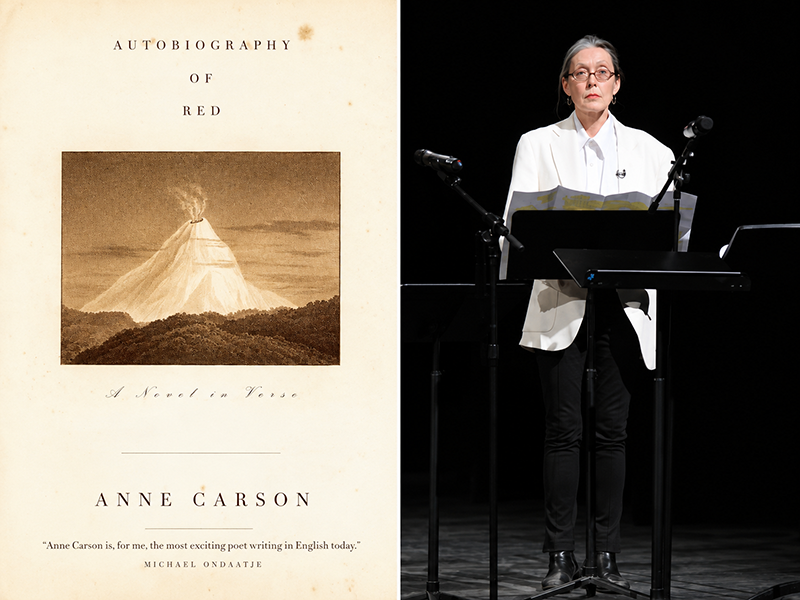
For readers approaching Carson for the first time, Autobiography of Red is perhaps the most accessible place to begin. Published in 1998, it transforms the ancient story of Geryon into a contemporary coming-of-age narrative. Carson turns a mythical monster into a vulnerable young person capable of love, jealousy, humiliation and heartbreak.
The book demonstrates one of her defining abilities: she can preserve the strangeness of mythology while making its emotional consequences feel completely modern.
The Beauty of the Husband takes another familiar human experience—marital breakdown—and reconstructs it through what Carson calls a “fictional essay in 29 tangos.” Men in the Off Hours combines poems, prose, historical figures, epitaphs and visual references. Decreation moves between poetry, philosophy, theology and opera.
Then there is Nox, perhaps one of the clearest examples of Carson’s determination to redefine the physical and conceptual boundaries of a book. Created in response to the death of her brother Michael, it combines photographs, letters, fragments, translation, collage and poetry in an accordion-fold structure. Grief becomes not only a subject but also a form.
Her more recent Wrong Norma continues this tendency. Its disconnected pieces deliberately resist conventional unity. The National Book Foundation’s judges called it a “mesmerizing and virtuosic enactment of the astonishments of mind in the making of art and meaning.”
The Un-Classifiable Anne Carson With Diverse Styles
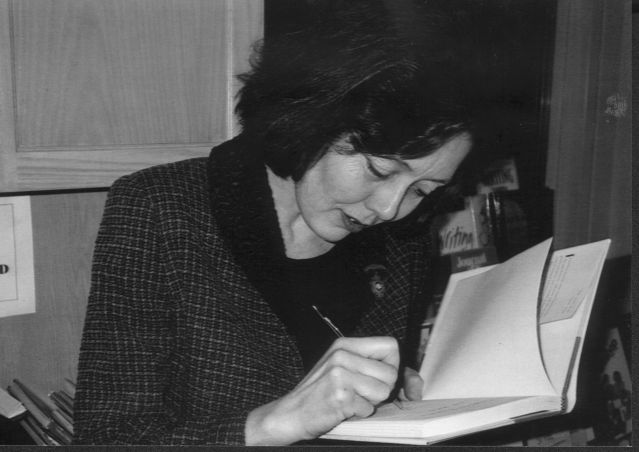
Carson’s literary style can be difficult to classify because classification is precisely what she frequently challenges. She writes with enormous intellectual precision but does not necessarily want the reader to experience intellectual certainty.
Her work is fragmented, allusive, humorous and frequently abrupt. A philosophical observation may be followed by a joke. A classical quotation may sit beside an apparently ordinary modern image. A poem may look like prose. A translation may become an independent creative work.
Critics have repeatedly noticed this quality. Daphne Merkin described Carson as “one of the great pasticheurs,” while also observing that her career has been “unclassifiable.” Writing about The Beauty of the Husband, Merkin argued that Carson was advancing poetry in an unusually radical direction.
Carson’s humour is equally important. A 2024 Guardian review of Wrong Norma described her “trump card” as the fact that she is funny. That humour prevents her intellectual density from becoming solemn. Even when she writes about death, desire or loss, she leaves room for absurdity.
Her Place in Modern Canadian Literature
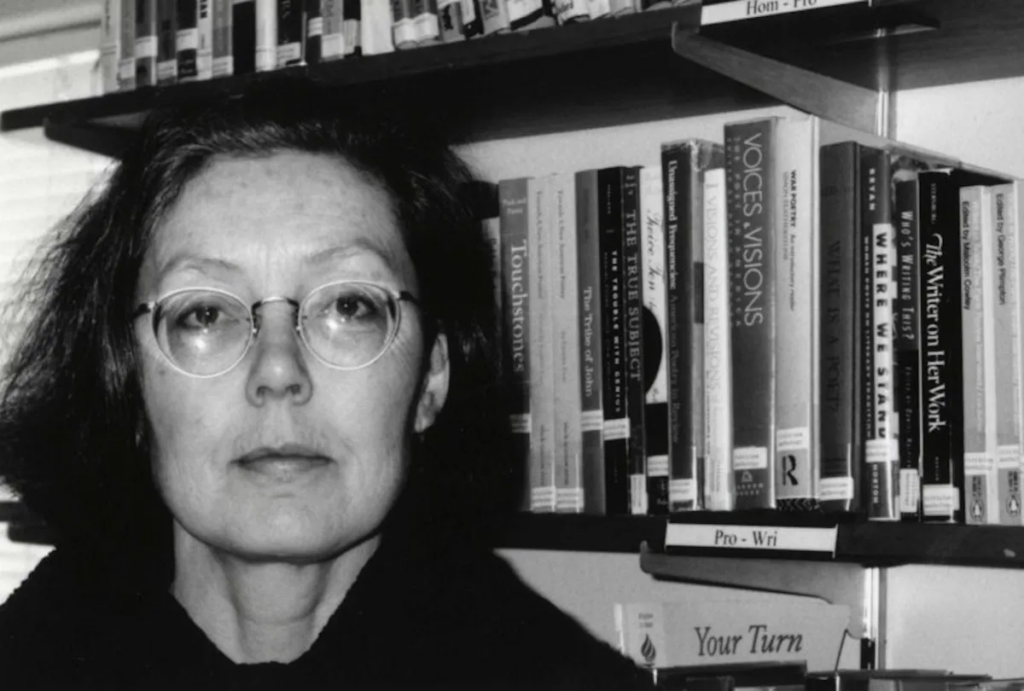
Carson occupies an unusual position within Canadian literature. She belongs to a national literary tradition that includes writers such as Margaret Atwood and Alice Munro, yet her project is markedly different. Where Canadian literature has often been associated with landscape, social history, identity, memory and place, Carson frequently travels through literature itself.
Her Canada is intellectual as much as geographical. Greek antiquity, European literature, modern America and contemporary popular culture can all become part of the same imaginative territory.
That does not make her less Canadian. Instead, it expands the possibilities of what Canadian literature can represent. Carson demonstrates that a Canadian literary voice does not have to remain confined to Canadian subjects. It can enter global literary history and return with something transformed.
Her Nobel recognition also follows Alice Munro’s 2013 Nobel, reinforcing Canada’s remarkable contribution to international literature. Yet Carson’s achievement is distinctive because she has made the relationship between classical inheritance and contemporary experimentation central to her entire career.
Why Read Anne Carson Now?
The most useful thing to understand before reading Carson is that her books are not always designed to provide comfortable conclusions. They ask readers to make connections.
She expects curiosity rather than complete familiarity with Greek mythology. She rewards readers who are willing to move between fragments and disciplines. Most importantly, she treats literature as an active encounter between the past and the present.
That is why the 2026 Nobel Prize matters. Carson has not merely produced remarkable individual books. She has expanded the vocabulary of contemporary literature. Her achievement lies in showing that poetry can absorb scholarship, that translation can become creation, that myth can become autobiography and that a book can be simultaneously an argument, an artwork, an archive and an emotional object.
Before reading Anne Carson, therefore, it is useful to forget the question of what shelf her books belong on. Her work is most rewarding when approached as a space in which different kinds of writing collide. The Nobel committee has now given that radical openness its highest international recognition.