



Author: Rudranath Chakraborty
Outdoor mobility is entering a new technological phase. Intelligent exoskeleton hiking systems are combining robotics, sensors and adaptive software to help people walk across demanding terrain with less physical strain. What once belonged mainly to medical rehabilitation and industrial robotics is now becoming an emerging category of hiking gear. The technology is particularly interesting because it does not simply add motor power. It attempts to understand how a person is moving and provide assistance at the right moment.
AI Hiking Technology Meets Intelligent Exoskeletons
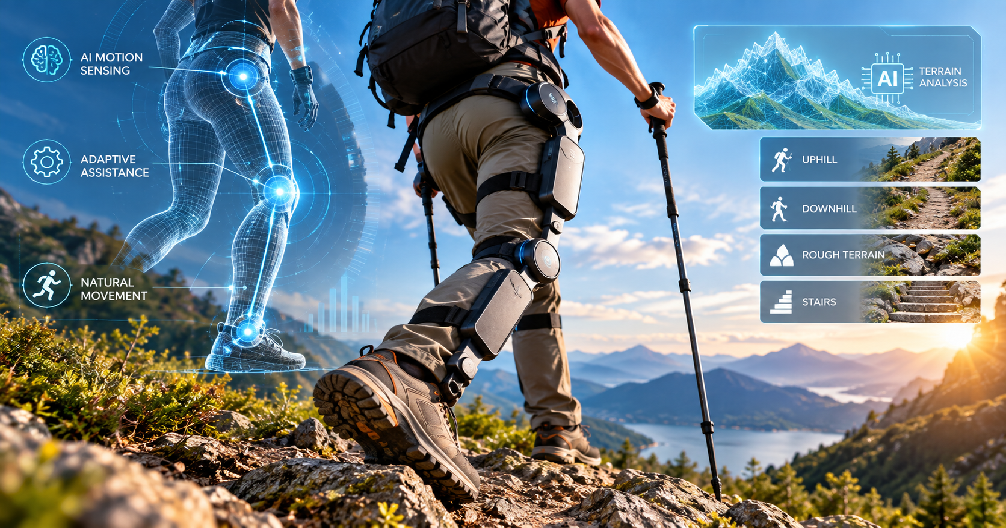
An intelligent exoskeleton begins by collecting movement information through sensors such as inertial measurement units, joint-position sensors and motor feedback systems. The software analyses gait, speed, stride changes and movement intention. Some newer systems are also exploring cameras and environmental sensing to recognize terrain.
The control system then calculates how much assistance is required. Motors positioned around the hips, knees or ankles deliver torque during specific phases of the walking cycle. The process continues through a feedback loop. The system senses movement, interprets it, predicts the next action, applies assistance and then adjusts the output according to the user’s response.
This adaptive approach is important because hiking rarely involves a perfectly consistent walking pattern.
How the New Technology Has Helped People in Their Endeavors

72-year-old Hypershell user described using the system during demanding Grand Canyon hiking. He reported that downhill resistance helped manage momentum while uphill assistance allowed him to maintain a strong pace. He later described the technology as helping him enjoy difficult hikes that had previously been physically challenging.
Another user review published by Hypershell describes a hiker who said the device allowed him to remain strong during a long hike until removing it revealed how much fatigue had accumulated. Such experiences suggest that the benefit may sometimes be most apparent after assistance stops rather than while the device is operating.
What Experts Say About Intelligent Hiking

Independent testing provides a more balanced perspective. WIRED reviewer Chris Haslam wrote that the latest system’s assistance is “significantly more intuitive than anything I’ve tried before.” His testing found the greatest benefit on steeper inclines while flat walking offered less obvious value.
Popular Science reviewer Sarah Horaczek also tested the system at the Grand Canyon. She observed that downhill operation required an adjustment period and concluded: “It’s a unique sensation, and you get more accustomed to it over time.”
Can You Get The Best Benefits with Exoskeleton Hiking or…?
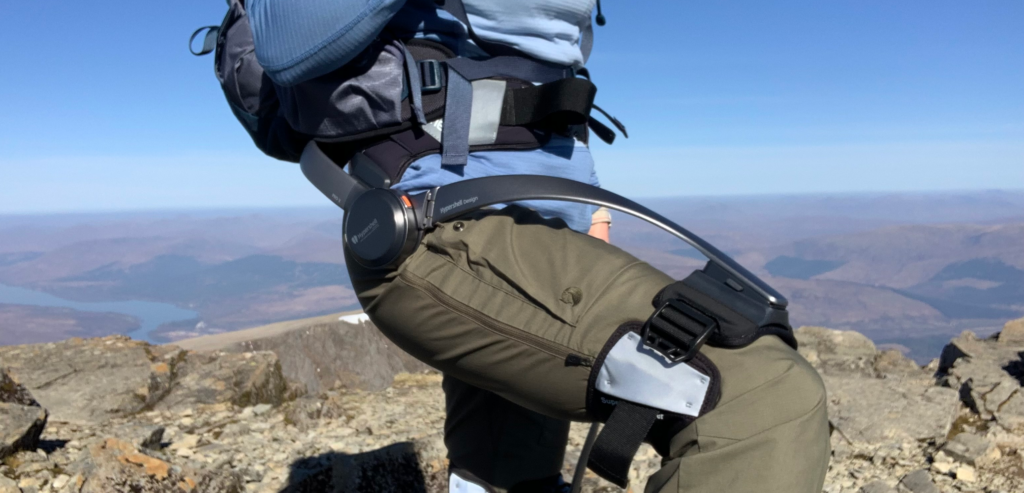
The potential benefits extend beyond climbing hills. Reduced muscular workload may help hikers conserve energy during long journeys. Adaptive assistance may also support older walkers and people who struggle with endurance. Different assistance modes can accommodate stairs, inclines, gravel and other terrain.
However, intelligent exoskeletons remain far from perfect. Battery life can become restrictive during demanding hikes. The equipment still adds weight and can interfere with backpack positioning. Users must also learn how the motors respond to different movements. Flat terrain may provide little justification for wearing a relatively expensive robotic system.
A New Future for Outdoor Mobility
Intelligent exoskeleton hiking represents an important intersection between hiking gear and advanced hiking technology. Future systems are likely to become lighter while combining gait prediction, terrain recognition and multi-joint assistance more effectively. The goal is not to replace human movement but to complement it.
As these systems become more natural and accessible, hiking could become easier for people who currently find distance, slopes or prolonged exertion limiting. The technology is still developing, but its direction is promising: a future where wearable robotics quietly works alongside the human body to make outdoor exploration more achievable.