


Author: Rudranath Chakraborty
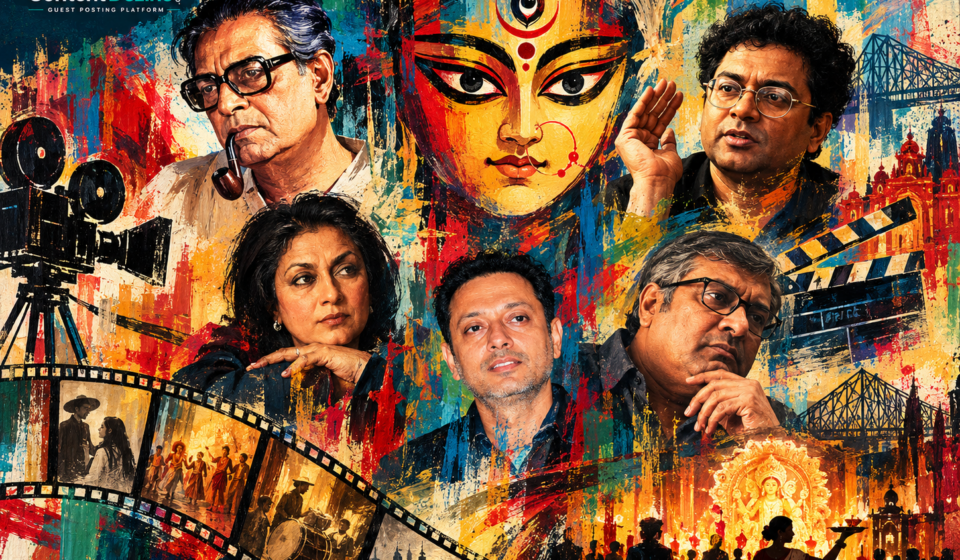
For Bengalis, Durga Puja is much more than a religious festival. It is a season of homecoming, food, adda, art, music, memories and, of course, cinema. That is why Kolkata’s Puja has appeared so often on the big screen. But some filmmakers have gone a step further. For them, Durga Puja is not simply a backdrop. It becomes a character in the story. Here are five directors who understood that particularly well. So here is the list of Bengali directors who made films on Durga Puja.
1. Satyajit Ray: When the Goddess Became a Question
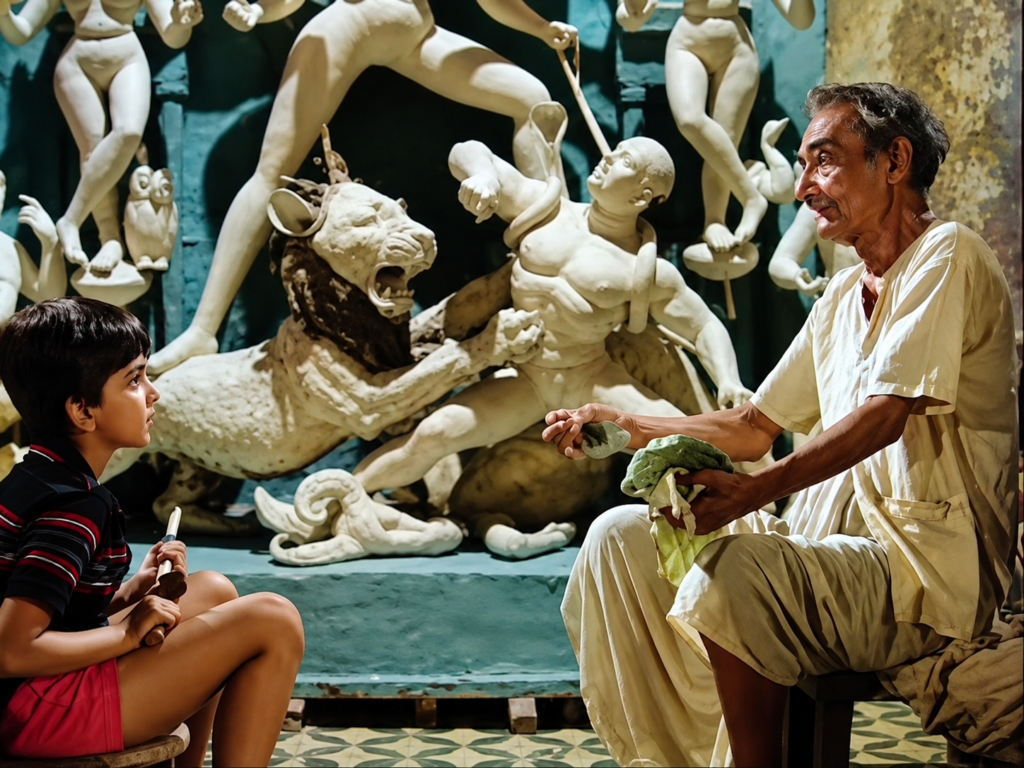
Satyajit Ray’s relationship with Durga imagery is one of the most powerful in Bengali cinema. Pather Panchali uses the rhythms of rural Bengal and Puja as part of Durga’s childhood world, while Devi (1960) takes the idea of the goddess into much darker territory. In Devi, a young daughter-in-law is believed by her father-in-law to be an incarnation of the Goddess. Ray uses this belief to question superstition, patriarchy and the dangerous consequences of turning a woman into an object of worship. The film was controversial because some viewers saw it as anti-Hindu.
Ray returned to Durga imagery in Joi Baba Felunath, where the deity and Puja become part of the storytelling. What makes Ray’s approach special is that he never treats the goddess merely as decoration. Durga becomes a way of asking difficult questions about Bengali society.
2. Rituparno Ghosh: Puja Comes Home

If Ray questioned faith, Rituparno Ghosh turned Puja into a story about family. His Utsab (2000) brings a Bengali family together in their ancestral home during Durga Puja. Old relationships, financial troubles, marriages and resentments slowly surface while the Puja continues around them.
The film’s cleverness lies in its simplicity. The biggest drama happens inside the house, while the goddess silently watches. Academic analysis of Utsab notes how Ghosh deliberately connected his imagery with Ray’s Devi and Joi Baba Felunath and Aparna Sen’s Paroma.
There is also a lovely anecdote from the film: the character Joy records the family Puja with a camcorder, effectively becoming a filmmaker within the film. Ghosh was almost commenting on how Bengali cinema itself has repeatedly tried to capture the meaning of Puja. Utsab went on to win Ghosh the National Film Award for Best Direction.
3. Aparna Sen: The Puja Behind the Perfect Family
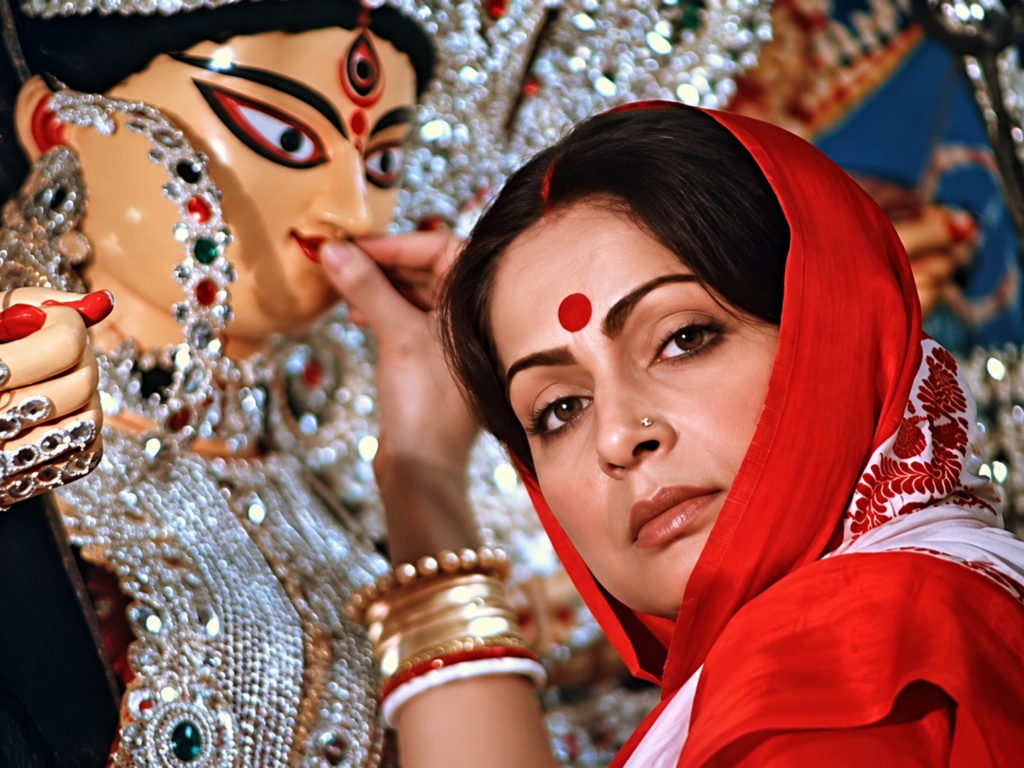
Aparna Sen’s Paroma (1985) begins in the world of an apparently respectable Bengali family celebrating Durga Puja. But beneath that familiar family picture is a woman struggling to discover who she really is.
That was daring cinema for its time. Sen has recalled that Paroma shocked people because it spoke openly about female desire and independence. She remembered audiences in Kolkata becoming angry because the character could easily have been someone they knew—a “boudi” or “mashi” in their own family.
That is what makes Sen’s Puja scenes important. The festival represents the polished public face of Bengali family life, while her protagonist exposes what may be happening behind closed doors.
4. Sujoy Ghosh: Dashami Turns into a Thriller
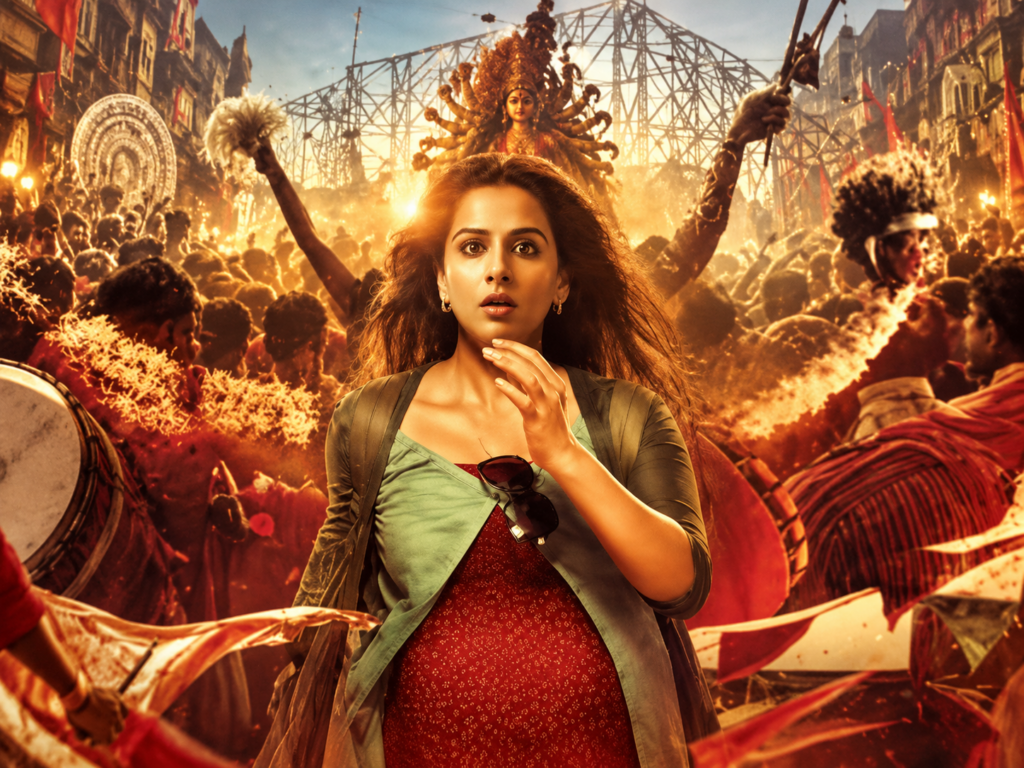
Sujoy Ghosh’s Kahaani (2012) gave Kolkata’s Durga Puja an entirely different role. The thriller was filmed on the streets of Kolkata during the 2010 Puja, and its climax was shot on Vijayadashami at a real Barowari Puja in Ballygunge.
Ghosh later explained why he chose Dashami for the emotional ending. He remembered seeing people cry when Durga leaves, and he wanted to use that feeling of departure in the film. For him, the emotion worked because the idea of “mother” could connect with audiences beyond Bengal.
It was a clever cinematic gamble: the enormous crowd, dhaak, sindoor and immersion created the perfect cover for the film’s final revelation.
5. Kaushik Ganguly: When Bishorjan Means More Than Immersion
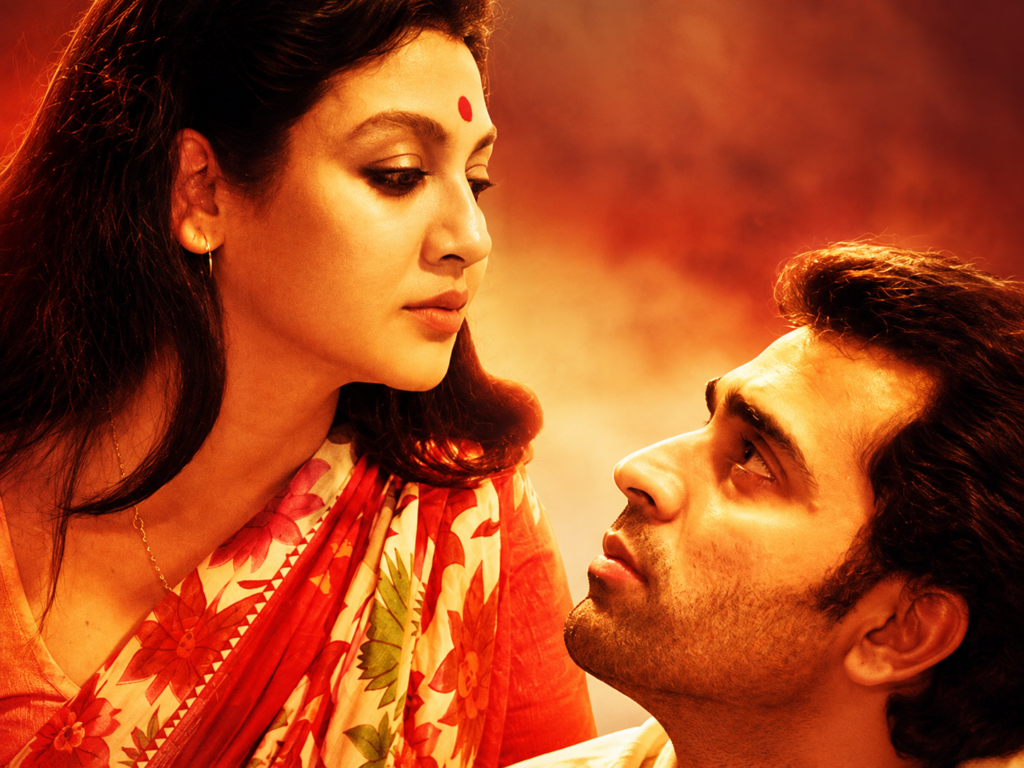
Kaushik Ganguly’s Bishorjan (2017) takes one of the most familiar moments of Puja—the immersion of the idol—and gives it a deeper meaning. The story of love between Padma and Nasir unfolds around the India-Bangladesh border, making Durga Puja a symbol of a culture that existed before political borders divided people.
The title itself means immersion, but the film uses that word metaphorically. The Bengal Film Archive describes the final send-off as a metaphor for accepting reality and letting go of a love that cannot continue.
The film won the National Film Award for Best Bengali Film, and its success led to the sequel Bijaya. Ganguly explained that Bijaya was deliberately conceived arou nd the Bengali tradition that follows immersion, continuing the unanswered questions of the first film.
And the list does not end here
There are many more filmmakers who have understood the cinematic power of Puja—Srijit Mukherji’s Uma, Arindam Sil’s Durga Sohay, Pavel’s Asur and Dhrubo Banerjee’s Durgeshgorer Guptodhon are notable examples. In all these Bengali movies based on Durga Puja in Kolkata, Puja does something more than make Kolkata look beautiful.
It creates a mood. It brings people home. It exposes old conflicts. It creates suspense. And, finally, it reminds us of something every Bengali understands: Durga arrives, everyone comes together, and then she leaves. Perhaps that is why filmmakers keep returning to her.