

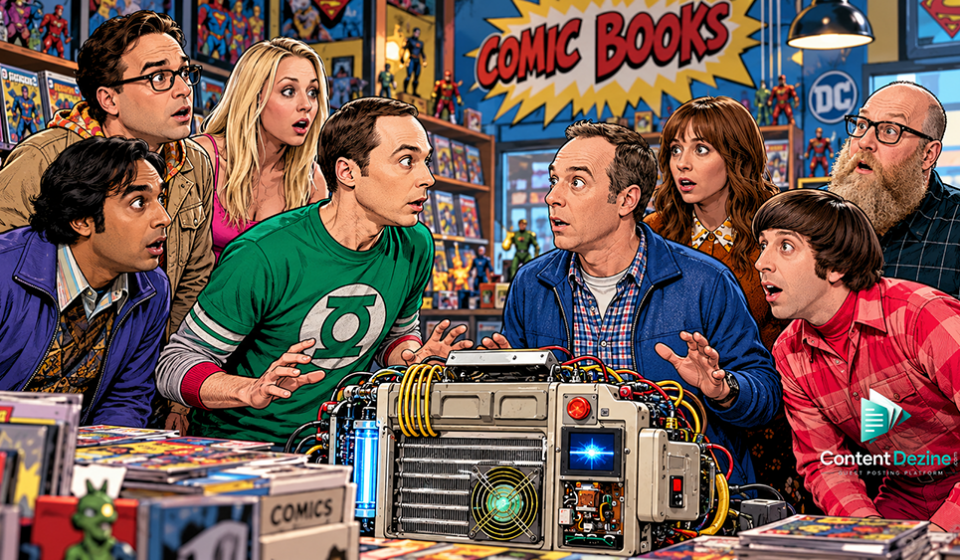
Stuart Fails to Save the Universe: Does Episode 10 of The Big Bang Theory Spin Off Could Save the Show?

Author: Rudranath Chakraborty
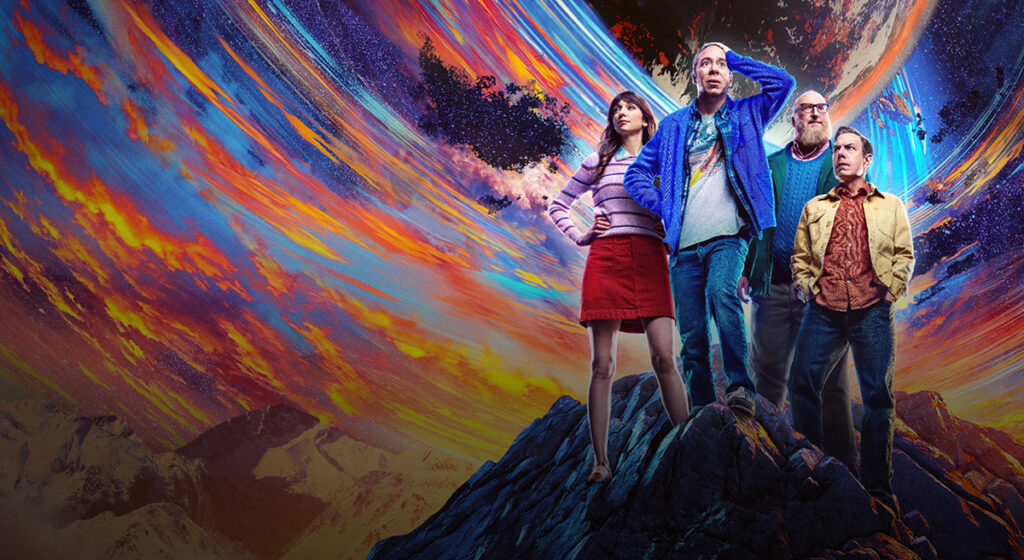
There is a particular danger in revisiting a television universe that has already achieved near-mythical status. The Big Bang Theory ended in 2019 after twelve seasons but its world did not disappear. Young Sheldon extended the mythology through childhood and family. Georgie & Mandy’s First Marriage carried the story forward through another branch of the Cooper family. Then came Stuart Fails to Save the Universe, a far more dangerous experiment because it takes one of the franchise’s least heroic characters and drops him into a multiverse catastrophe.
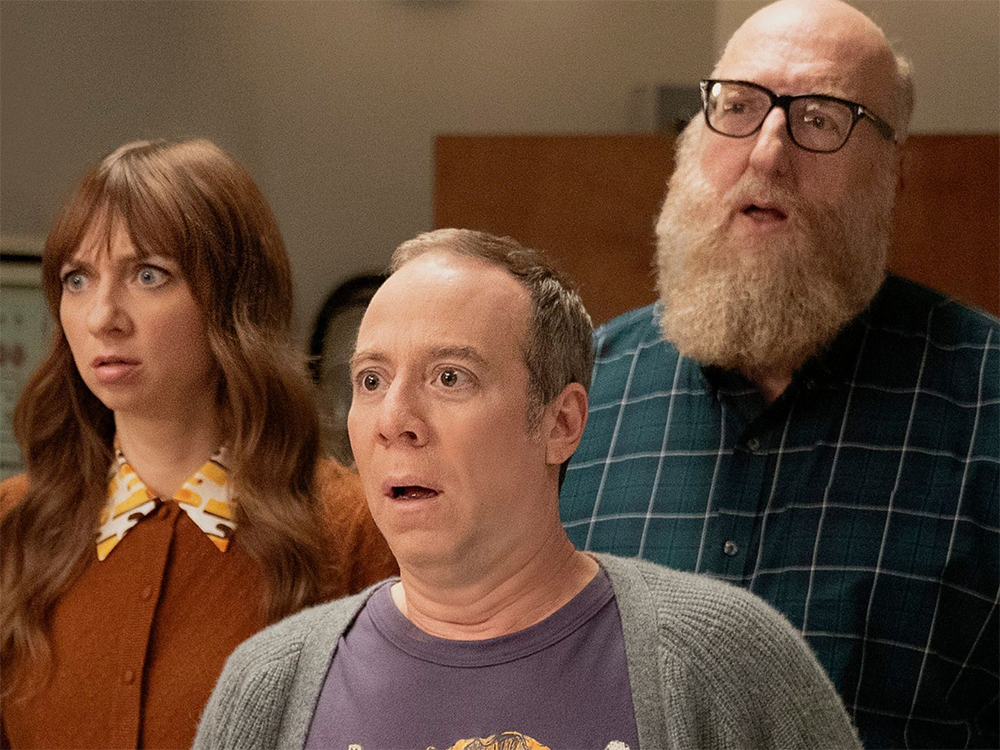
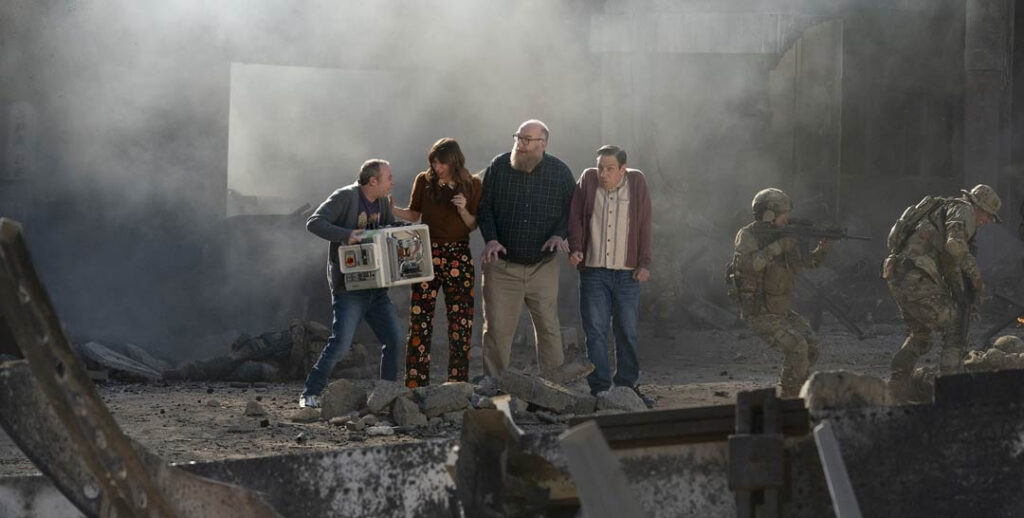
What makes the series fascinating is its willingness to combine absurdity with science. The premise begins with a quantum device built by Sheldon, Leonard and Howard and accidentally damaged by Stuart. From there the characters move through radically different realities. The show’s central science is deliberately simplified but draws upon ideas associated with quantum branching and the multiverse. By Episode 10 that underlying idea becomes something much larger: reality itself may be only one layer of the story.
And that is where the finale becomes genuinely interesting. But it also raises the central question: does this spectacular expansion of the concept actually save the show from its plot holes and increasing confusion? So here is the Stuart Fails to Save the Universe Episode 10 review and analysis for you. Beware! Spoilers included.
Stuart Fails… Episode 10 Turns the Entire Premise Inside Out
Episode 10, “Spoiler: Filmed Before a Live Studio Audience,” begins after the group has escaped the DC-inspired comic-book universe. Stuart, Denise, Bert and Kripke do not return neatly to their original reality. Instead they encounter a void and learn more about the mysterious Adversary that has been influencing their journey.
The progression is deliberately disorienting.
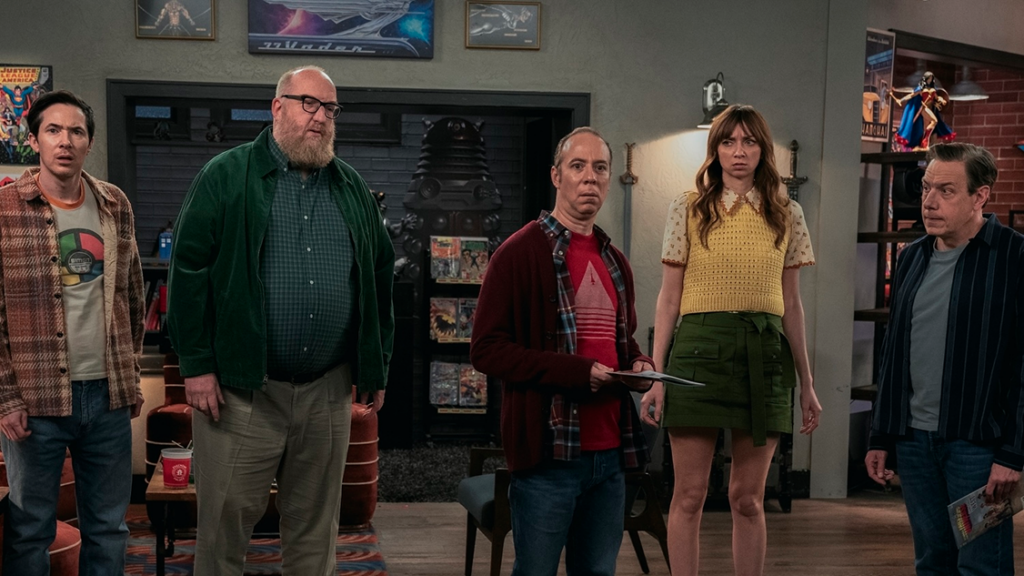
First there is the expectation that the heroes have finally returned home. Then the familiar environment begins behaving incorrectly. Laughter can be heard when there should be no audience. Kripke becomes increasingly disturbed by it. Bert hears it too. Stuart catches a glimpse of something beyond the apparent world.
Then comes the revelation.
They are not simply in another universe.
They are inside a sitcom.
The characters eventually break through the apparent boundaries of their reality and reach the Warner Bros. lot and Stage 25 — the same stage associated with The Big Bang Theory. They see actors playing versions of themselves and suddenly confront the uncomfortable truth that, from another level of existence, their lives are television.
It is a remarkably audacious idea.
The Last Action Hero Comparison Is More Than a Joke
The sequence inevitably recalls Last Action Hero, where a fictional character (played by Arnold Schwarzenegger) crosses the boundary separating his movie world from the world containing the actor who plays the hero.
Episode 10 uses essentially the same conceptual shock but applies it to a television multiverse.
Stuart is not merely discovering another alternate Stuart. He discovers Kevin Sussman playing Stuart. Denise encounters Lauren Lapkus. Bert encounters Brian Posehn. Kripke encounters John Ross Bowie.
That distinction matters.
The show has spent nine episodes teaching viewers to accept alternate versions of characters, alternate histories and altered physical laws. Episode 10 suddenly asks the audience to consider the possibility that the entire television universe is itself another layer of reality.
That is where the finale becomes much more than a conventional science-fiction episode.
But This Is Not Quite Our Real World for The Viewers
The cleverest part of the idea is that the characters apparently do not arrive in our exact reality.
Instead they reach another reality that resembles the world outside their universe. The television show they encounter is not simply The Big Bang Theory as viewers know it. The meta-reality has its own fictionalized television-production framework.We can see Young Leonard and Two and a Half Women, similar the two Chuck Lore productions, Young Sheldon and Two and a Half men
That detail is crucial because otherwise the series would effectively be declaring that its characters have escaped into the actual world of the audience.
Instead the writers preserve their multiverse rules.
There is another layer.
Another reality.
Another version of television.
The joke therefore becomes scientifically impossible but internally consistent with the show’s central philosophy: there may always be another reality beyond the reality you think is fundamental.
That is also why the use of the show’s own production environment works so well. The cast literally returned to the stage where they filmed The Big Bang Theory, making the boundary between character, actor and production unusually tangible.
The Science Beneath the Absurdity
The science of this Big Bang Theory spin off to Save the Universe should not be treated as literal physics. The device, inter-dimensional travel and navigation between realities are fictional inventions.
But the show repeatedly borrows language and concepts from genuine theoretical physics.
The most obvious influence is the Many-Worlds Interpretation of quantum mechanics, associated with Hugh Everett. In simplified terms, it proposes that quantum possibilities can be understood as different branches of reality rather than one possibility being selected through conventional wave-function collapse.
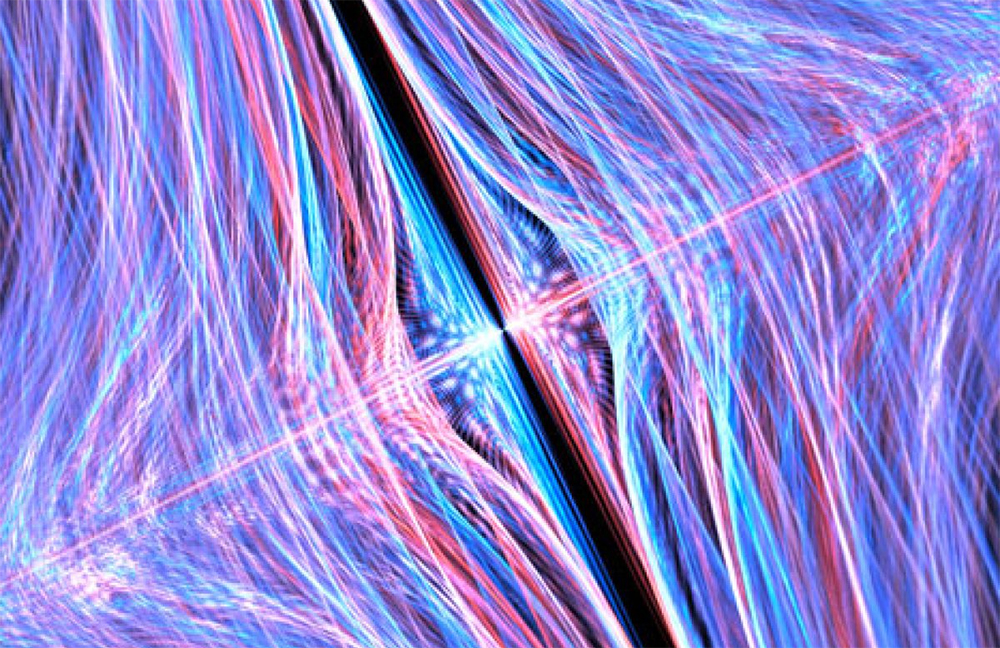
The series turns that abstract concept into a comic adventure.
The quantum device effectively gives Stuart’s group access to those branches. The characters then discover that moving between realities is not equivalent to moving through ordinary physical space. This is why the missing “steering wheel” becomes important: the group can jump between realities but cannot simply select the universe and moment they want.
The show also plays with quantum entanglement. Stuart becomes uniquely connected to the original catastrophe and therefore to the consequences of the device.
Episode 10 takes that scientific metaphor one step further.
If reality can branch endlessly, what happens when the characters discover that their own reality is also a constructed narrative?
The finale effectively turns quantum uncertainty into narrative uncertainty.
Who — or What — Is the Adversary?
The Adversary provides the darker philosophical foundation beneath all the jokes.
The entity is presented as an ancient intelligence associated with existence before the Big Bang. Its resentment is tied to the emergence of a universe filled with matter, life and consciousness. Stuart’s accidental destruction of the quantum device then becomes the event that gives this ancient force an opportunity to interfere with the realities that followed.
But the finale deliberately refuses to make the Adversary completely straightforward.
It is not simply another villain who wants to conquer the universe.
Its probable objective is closer to undoing or rejecting the reality that came into existence after the Big Bang.
That makes the Adversary an interesting conceptual antagonist. Stuart and his friends represent existence, change and increasingly complicated reality. The Adversary represents the desire for the universe to return to something closer to nothingness.
The unanswered question is whether the entity wants to destroy reality or control the narrative architecture connecting these realities.
Episode 10 leaves that question deliberately open.
Where the Show Becomes Confusing
This is also where the show’s greatest strength becomes its biggest weakness.
The multiverse has now accumulated several layers: alternate timelines, altered physical laws, comic-book reality, the void, quantum navigation and the sitcom reality.

The problem is not that any one idea is impossible within the show’s rules. The problem is that the rules keep changing.
The first confusion comes from whether the device creates realities or accesses realities that already exist.
The second comes from time versus alternate universes. The characters discover that traveling sideways between realities does not necessarily take them back to the moment before the catastrophe.
The third and most significant comes in Episode 10: what qualifies as the “real” reality if one universe can contain a television production about another universe?
That is intellectually playful but dramatically dangerous.
If every explanation creates another layer then the audience can eventually stop caring which layer is real.
The Inspiration Behind the Reinvention
The show’s biggest creative gamble is that it does not attempt to reproduce the original sitcom.
Instead it takes the scientific vocabulary, comic-book obsession and eccentric personalities that existed around the edges of the original series and makes them the central engine of a science-fiction adventure.
That is a significant change.
The franchise originally used science as part of character comedy. Stuart Fails to Save the Universe uses science as part of the plot itself.
It also understands the comic-book culture surrounding Stuart’s character. The series can move from quantum mechanics to DC superheroes to sitcom conventions without pretending that these worlds belong to the same genre.
Episode 10 finally reveals the larger idea behind that madness.
Perhaps the show was never merely about saving one universe.
Perhaps it was about asking what happens when characters who understand fiction begin to realize that they themselves are fictional.
What Could Season 2 Hold?
Season 2 now has several enormous possibilities.
The first is the Adversary. The series has introduced a threat whose motivations remain only partially understood.
The second is the sitcom reality. If Stuart and his friends can reach the world containing actors who portray them, the writers have created an almost limitless meta-fictional playground.
The third is the question of whether the group can actually return to the original universe — or whether “original” has become meaningless after everything they have experienced.
The fourth is Stuart himself.
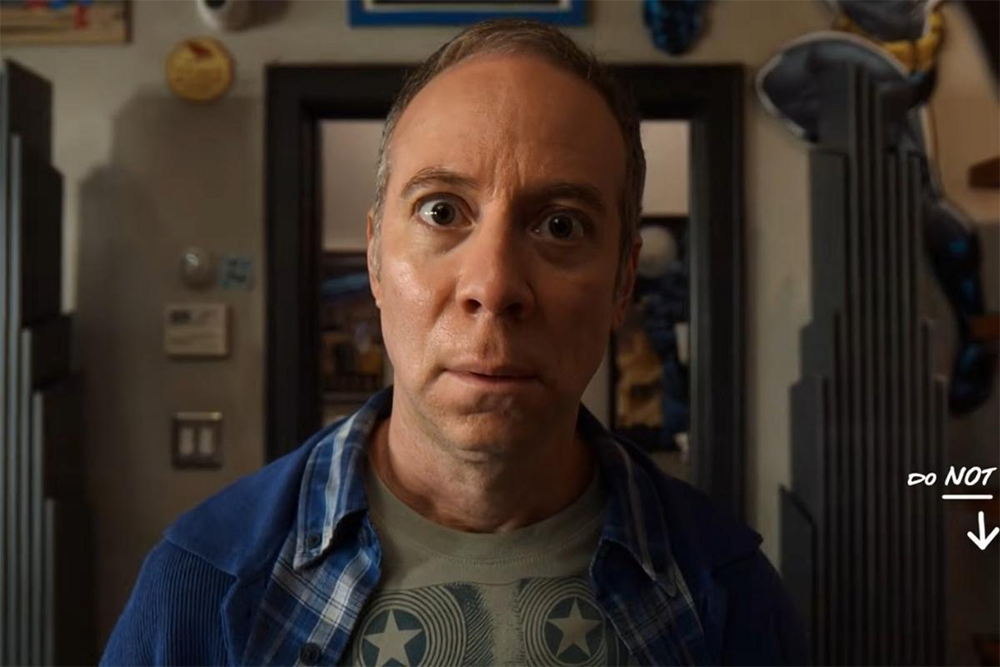
His journey has changed from an accidental disaster caused by a comic-book-shop owner into something approaching a question of identity and agency.
That may ultimately be the most interesting direction for Season 2.
Does Episode 10 Save the Show?
Episode 10 does not magically eliminate every structural problem in Stuart Fails to Save the Universe. In fact, it adds several new questions.
But it does something arguably more important.
It reveals that the apparent chaos has a larger creative purpose.
The series has been experimenting with science, absurdity, alternate realities, comic books and sitcom conventions. Episode 10 finally puts all those ingredients into the same conceptual frame.
Whether that is enough to rescue every weakness remains debatable. But as a finale, it is undeniably ambitious.
The real gamble now belongs to Season 2.
If the writers can give the multiverse clear rules and emotional consequences while retaining the absurdity that makes Stuart such an unlikely hero, the show has somewhere genuinely interesting to go.
If not, the multiverse may become less a source of wonder than an excuse for endless resets.
And that is the ultimate irony of Stuart’s mission: saving the universe may prove considerably easier than explaining which universe he is supposed to save.
Post Script: The finale aired on September 24, 2026, and current review coverage confirms that the episode deliberately breaks the fourth wall and places the characters on the familiar Big Bang Theory production stage.