

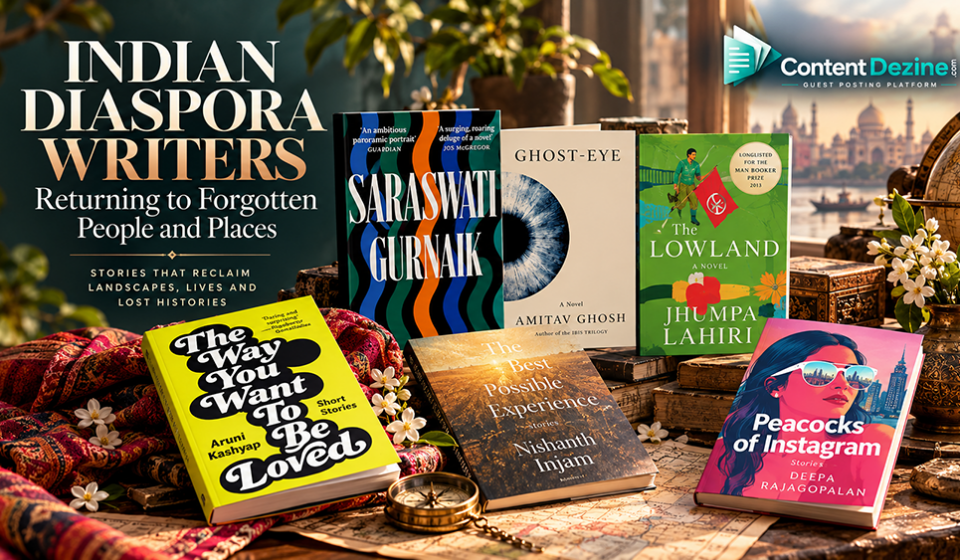
5 Indian Diaspora Writers Who Are Now Returning to Forgotten People and Places in Their Stories

Written by Rudranath Chakraborty
For a long time, Indian diaspora fiction was closely associated with questions of migration, identity, displacement and the meaning of home. Writers who moved between India and other countries often wrote about the emotional distance between two worlds. But a newer body of writing is making that journey more complicated. Instead of simply remembering the homeland, these writers are returning to people, communities, landscapes and histories that are often overlooked.
This is where contemporary Indian diaspora writers become particularly interesting. Their stories move between India and the wider world, but their gaze frequently turns towards places and people that have remained outside the center of literary attention. From Punjab and Bengal to Assam and the lives of immigrants abroad, these writers are asking what happens to a place and its people after the world moves on.
Gurnaik Johal and the Lost River of Punjab: Saraswati

Gurnaik Johal’s Saraswati is perhaps one of the clearest examples of this new form of return. The novel begins with Satnam, a man living in London, traveling back to his ancestral village in Punjab for his grandmother’s funeral. There he discovers water in a well that has long been dry. The possibility that the legendary Saraswati river may have returned sets off a much larger story involving family, politics, mythology and environmental questions.
Johal’s return is therefore not simply nostalgic. Punjab becomes a landscape of buried histories and contested memories. The river itself becomes a metaphor for things that societies declare lost but continue to influence the present. Johal has connected the novel’s origins to his grandfather’s death and the scattering of his ashes in Punjab as well as his interest in India’s disappearing rivers.
Amitav Ghosh and Memories With Time: Ghost-Eye
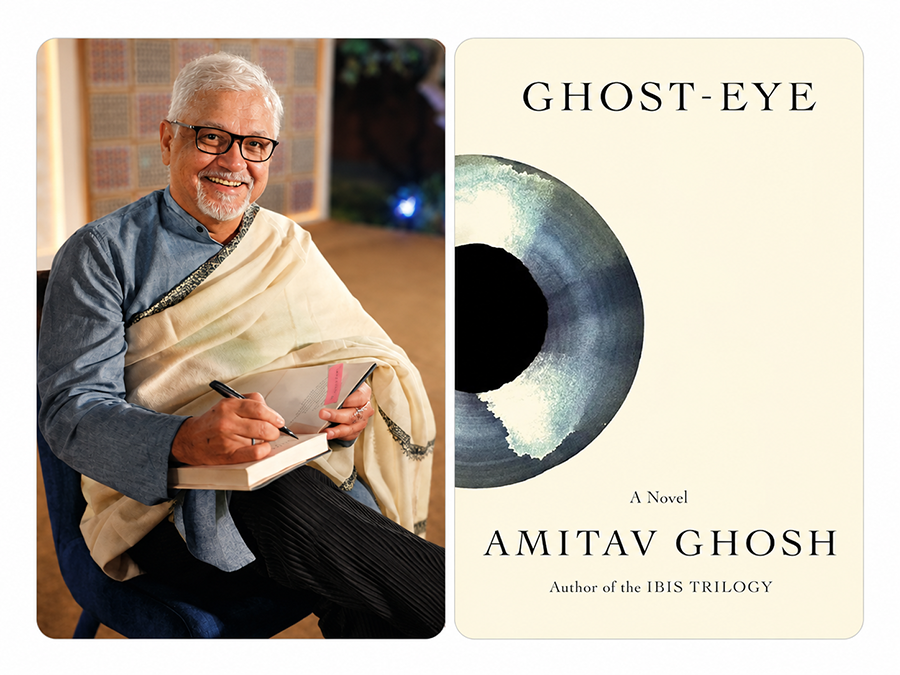
Amitav Ghosh’s Ghost-Eye takes the idea of return into stranger and more mysterious territory. The novel begins in Calcutta in 1969 with Varsha Gupta, a three-year-old girl who claims to remember another life and unexpectedly develops a desire for fish despite growing up in a strict vegetarian household. Decades later, her case becomes relevant to a new generation investigating memory, ecology and the boundaries between belief and reason.
Ghosh returns to Bengal not simply as a geographical homeland but as a world of folklore, food, ecological memory and buried experiences. Kolkata and the Sundarbans are central to the novel’s atmosphere. The book also connects personal memory with larger questions about environmental change and the relationship between humans and the natural world.
Jhumpa Lahiri and Political Pasts of Calcutta: The Lowland
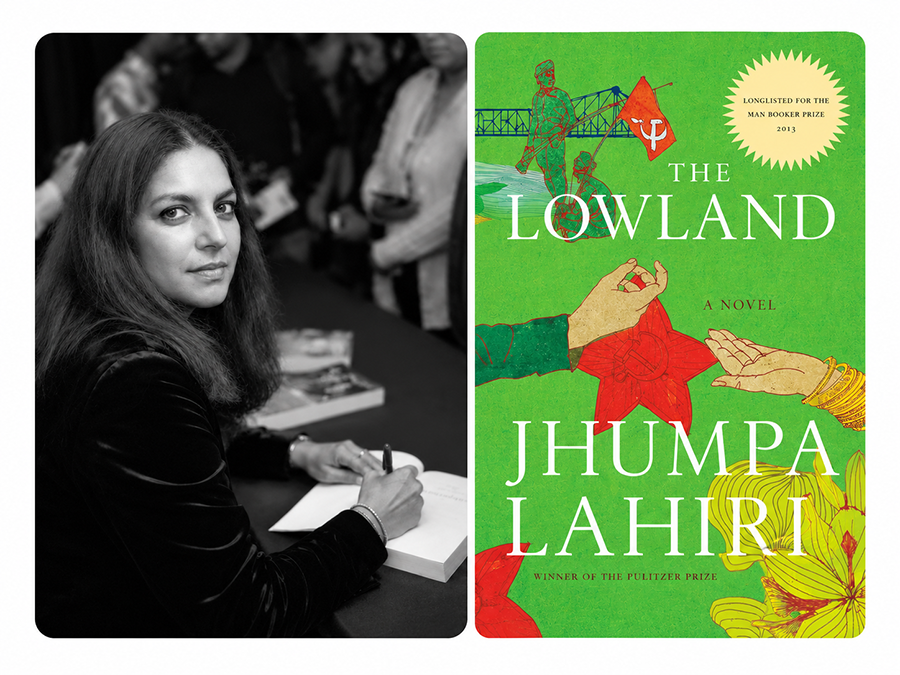
Jhumpa Lahiri’s The Lowland predates some of the newer works in this group, but it remains important to understanding the changing shape of Indian diaspora literature. The novel follows brothers Subhash and Udayan, who grow up in Tollygunge, Calcutta. Their lives diverge when Udayan becomes involved with the Naxalite movement while Subhash leaves for graduate study in Rhode Island.
The novel’s return is deeply connected to memory. Subhash leaves India but cannot leave behind the political violence and family tragedy associated with his brother. The lowland behind the family home, where Udayan is killed, becomes an enduring physical and emotional landscape. Years later, returning to Calcutta means confronting a past that has never really disappeared.
Aruni Kashyap and the Northeast India: The Way You Want to Be Loved
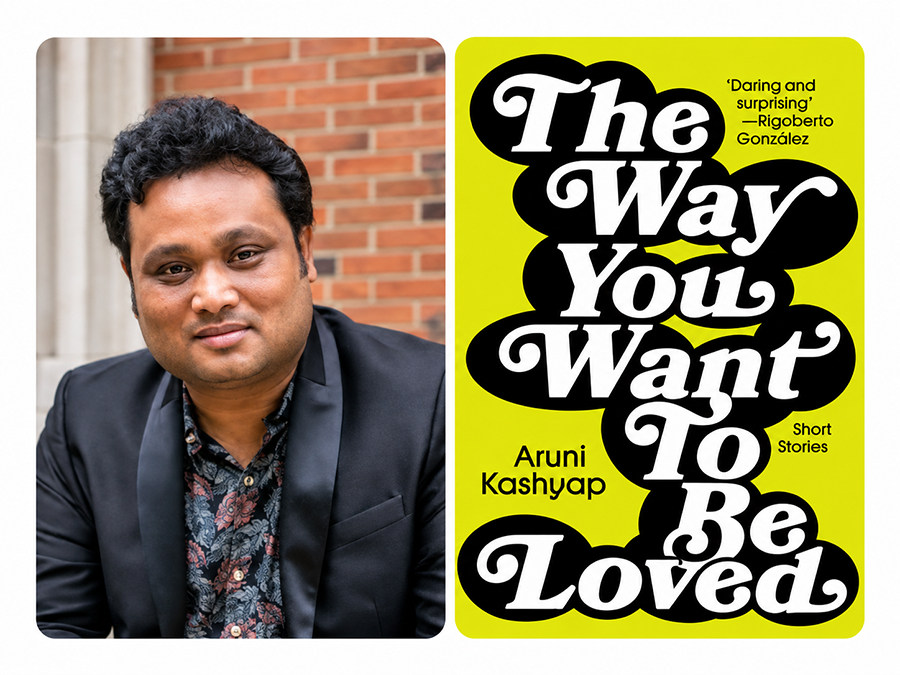
Aruni Kashyap’s The Way You Want to Be Loved expands the idea of forgotten places by taking readers into India’s Northeast. The collection presents thirteen stories involving queer characters, displaced people, academics, villagers, soldiers, politicians and families. Its setting is important because the Northeast remains comparatively underrepresented in English-language Indian fiction.
Kashyap’s stories do not reduce Assam and the Northeast to insurgency or political violence. Instead, they bring everyday lives into view. Folklore, desire, family expectations, migration and personhood exist alongside larger political pressures. A writer can therefore return to a region not merely by describing its landscape but by allowing its ordinary people to become the center of the story.
Nishanth Injam and the Remaining People: The Best Possible Experience
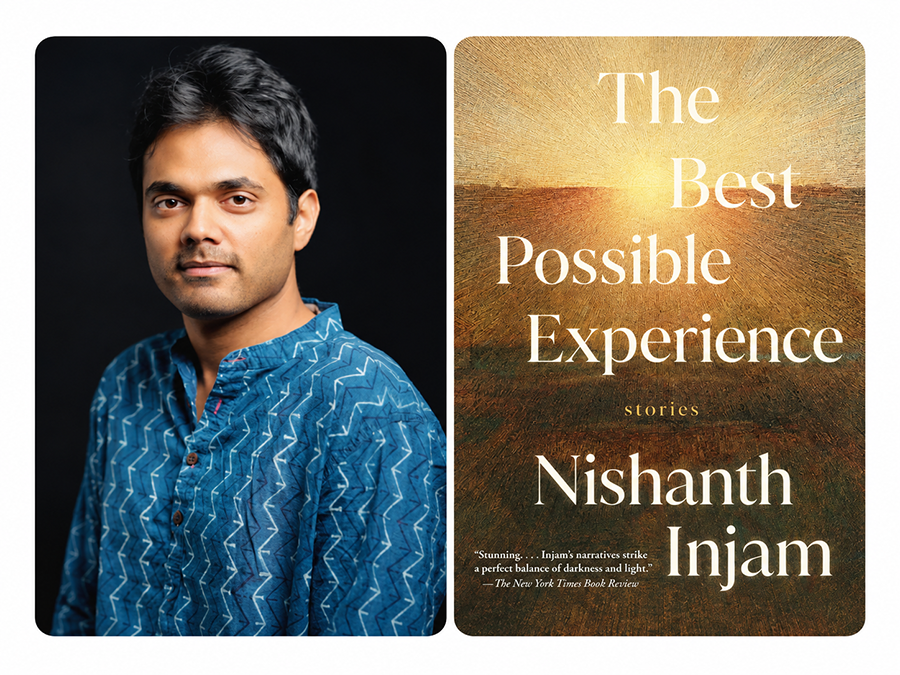
Nishanth Injam’s The Best Possible Experience is built around departures and returns. The collection moves between contemporary India and its American diaspora while exploring what home means to people who have crossed borders. Its stories include a woman returning to a small Indian village to visit her grandfather and characters dealing with immigration, marriage, grief and displacement.
Injam’s fiction is especially interested in ordinary people rather than grand historical figures. His villages, families and migrants carry memories that do not necessarily enter official histories. The result is a form of literary preservation: people who might otherwise become background figures are given complex emotional lives.
Deepa Rajagopalan and the Invisible Diaspora: Peacocks of Instagram

Deepa Rajagopalan’s Peacocks of Instagram takes the return to forgotten people in another direction. Born to Indian parents in Saudi Arabia and later living in India, the United States and Canada, Rajagopalan writes about diasporic lives without allowing cultural identity to become a simple label.
Her characters include coffee-shop workers, hotel housekeepers, immigrants and women negotiating gender and class inequalities. The publisher describes the collection as stories about safety, survival and what it means to call somewhere home.
Rajagopalan has also spoken about wanting her characters to be seen as individuals rather than broad representations of cultural backgrounds. That approach is central to the book. These are people who exist in the margins of larger immigrant narratives, yet their lives are full of ambition, humor, anger, vulnerability and resilience.
Beyond Nostalgia
Together, these six books suggest that diaspora fiction is changing its direction. The journey is no longer simply from India to another country and back again. It can move through memory, family, politics, folklore, migration, landscape and forgotten communities.
Johal looks towards a lost river and an ancestral Punjab. Ghosh returns to Bengal through memory, ecology and the uncanny. Lahiri revisits the political wounds of Calcutta. Kashyap gives the Northeast’s overlooked communities literary space. Injam preserves the emotional worlds of people divided between India and America. Rajagopalan turns towards immigrant workers and women whose stories often remain invisible.
The new generation of Indian diaspora writers is therefore doing something quietly significant. They are not merely asking where home is. They are asking whose home gets remembered, whose history survives and whose story deserves to be heard.
Perhaps that is the most meaningful form of literary return: not going back simply to a place, but looking again at the people who were always there.