



Author: Rudranath Chakraborty
For generations, the travel guide promised certainty. It told us where to sleep, what to eat, which road to take and which monument deserved an hour of our attention. It reduced a city to recommendations and a landscape to coordinates.
But travel writing has begun to want something more elusive.
The most compelling ` are increasingly less interested in telling us where to go than in asking what a place does to us once we arrive. Landscape is no longer merely scenery. It becomes memory, witness, history and sometimes something remarkably close to a character.
A Shift from From Places to Presence
Robert Macfarlane’s The Old Ways offers perhaps one of the clearest examples of this transformation. Penguin describes it as “a book about people and place” and explains that its paths become ways of “feeling, knowing and thinking.”
That distinction matters.
Macfarlane does not simply walk ancient routes and catalogue what lies beside them. His journeys move through geology, archaeology, literature, natural history and memory. The path itself becomes an archive. It carries the footsteps of generations and connects geography with human experience.
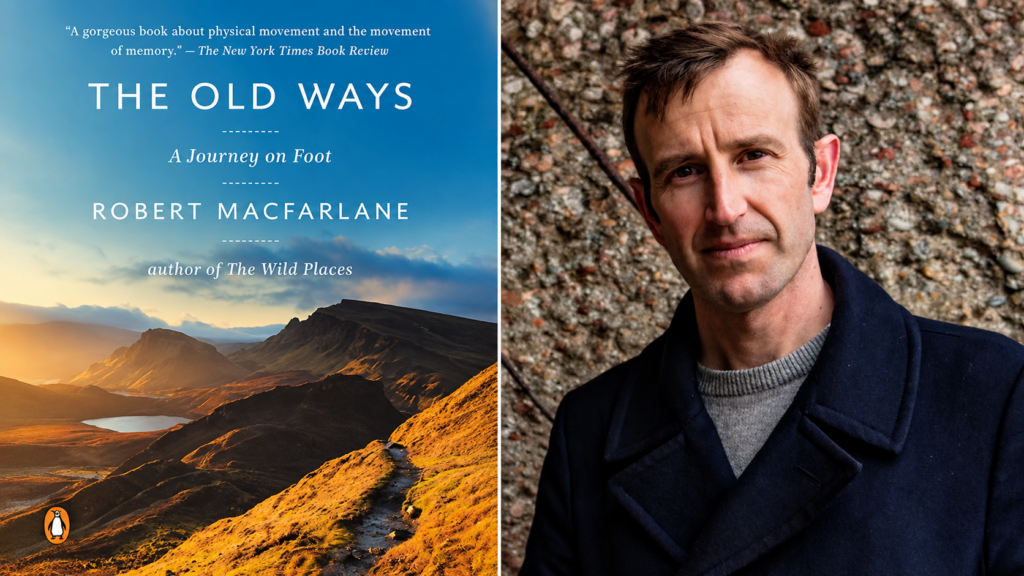
The Guardian’s William Dalrymple called the book a “tour de force” and observed that Macfarlane’s landscapes contain not only animals, stones and plants but also the people who inhabit them.
This is travel writing without the tyranny of the checklist.
When Landscape Starts Speaking
In Landmarks, Macfarlane pushes the idea further. Penguin writes that “words are grained into our landscapes, and landscapes are grained into our words.”
The sentence captures a profound change in how travel can be written.
A destination guide tells us what a landscape is called. Literary travel asks what that landscape has been called, remembered, feared, loved and imagined. The difference is enormous.
Macfarlane’s glossary of regional words suggests that vocabulary itself can become a map. A disappearing word can carry an entire way of seeing the natural world. As the Financial Times review quoted by Penguin puts it, Landmarks is “a bid to save our rich hoard of landscape language.” The traveler therefore becomes less a consumer of places and more a listener.
The Journey That Changes the Traveler
Raynor Winn’s The Salt Path takes another route into this territory. The journey begins not as leisure but as catastrophe: homelessness, financial ruin and Moth’s terminal diagnosis force Raynor and Moth onto a 630-mile walk along England’s South West Coast Path. Penguin describes the resulting book as a story of grief and “the healing power of the natural world.”
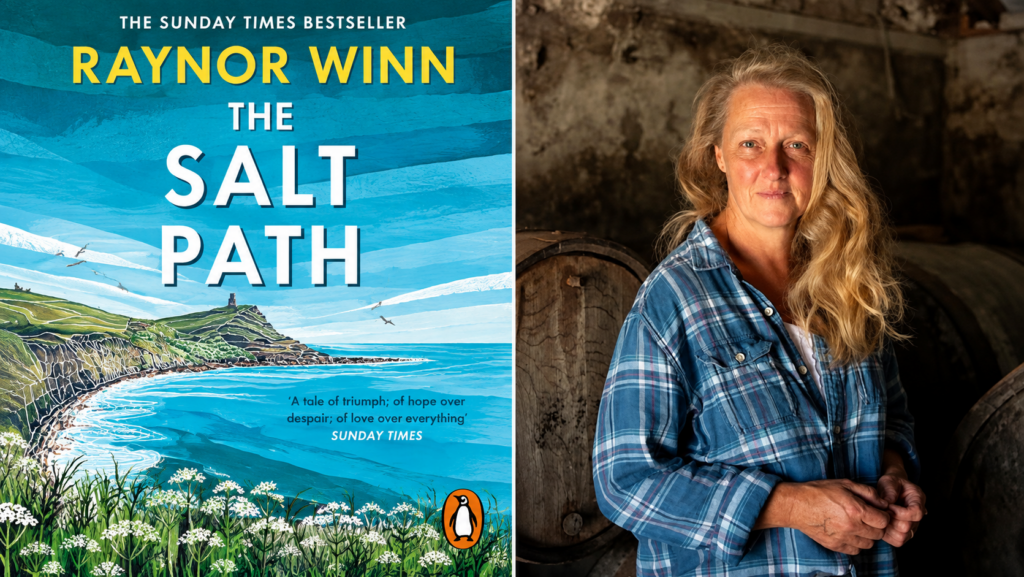
The landscape is inseparable from the emotional narrative.
Cliffs, sea, weather and open sky are not decorative backgrounds behind the couple’s suffering. They become participants in the story. The journey changes the meaning of home itself.
Winn later explained that writing the journey allowed her to place Moth beside her again so that when he read it, he would not merely hear the wind but “feel it.”
That is almost the opposite of conventional destination writing. The purpose is not to possess the landscape through description. It is to make the reader inhabit it.
Readers Moving Beyond the Guidebook, But Why?
The shift also reflects changing patterns of travel. In 2026, Forbes reported growing interest in literary travel, reading retreats and slower forms of book-centered tourism. It described books as becoming “the new itinerary,” with travelers increasingly seeking meaningful experiences rather than simply ticking attractions off a list.
National Geographic similarly reported that vacations organized around books and authors are rising, driven partly by BookTok, book clubs and literary communities.

The implication for modern travel writing books is significant. Readers increasingly want the emotional geography behind a place: its stories, contradictions, ghosts and people.
They want to know not only what they will see, but what they might feel.
The New Cartography
This does not mean guidebooks are disappearing. Publishers continue to produce practical travel guides, particularly as travelers rethink domestic trips, road journeys and value-conscious holidays. Publishers Weekly reported in 2026 that guidebook publishers were adapting to those changing travel habits while also producing inspirational books for readers who dream about places.
The difference is that literary travel occupies another territory. The best literary travel writing books do not merely locate us geographically. They locate us emotionally.
They remind us that a mountain can contain memory; a road can preserve history; a coastline can become a companion; and a village can reveal an entire civilization through the lives of the people who inhabit it. Perhaps this is why travel writing remains alive in an age of Google Maps and instantaneous information. A map can tell us where we are. A great writer can tell us why being there matters.