


Written by: Rudranath Chakraborty
In a city that has always allowed clothing to become a language of identity, one artist is turning the humble gamcha into dresses, saris, jackets and a larger idea of what sustainable fashion can mean.
There is something wonderfully contradictory about Trie Paul’s little world in Golpark.
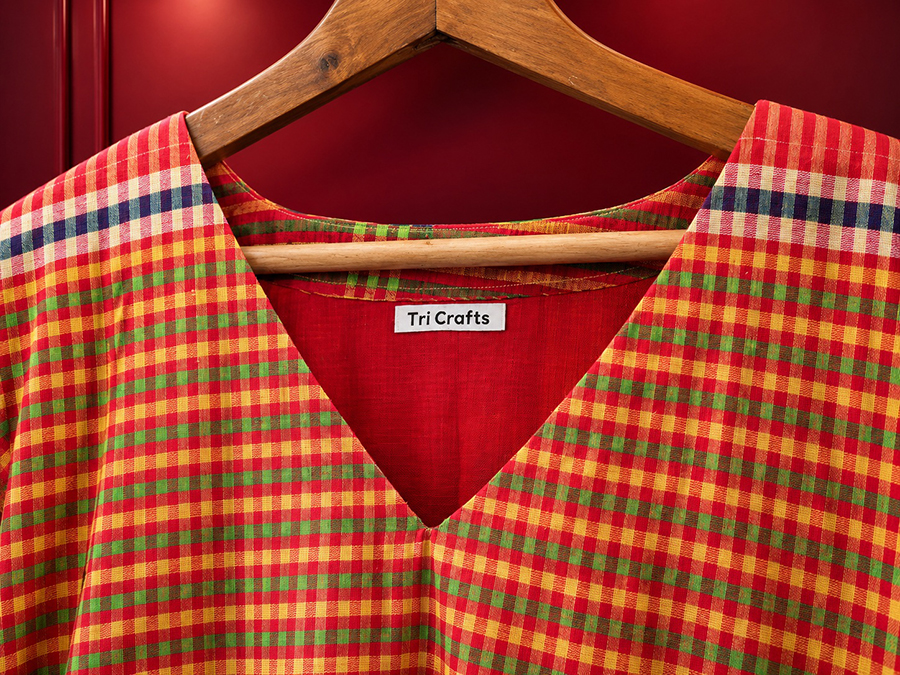
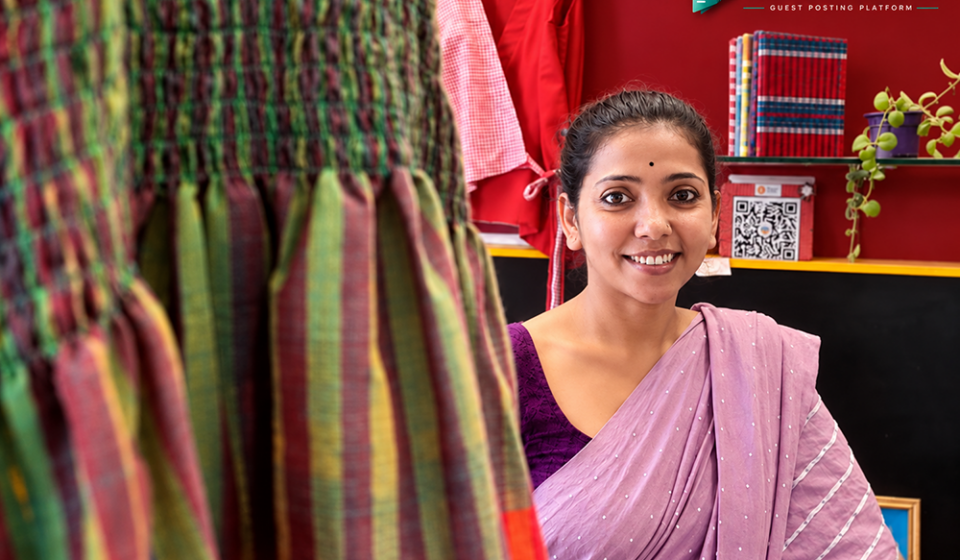
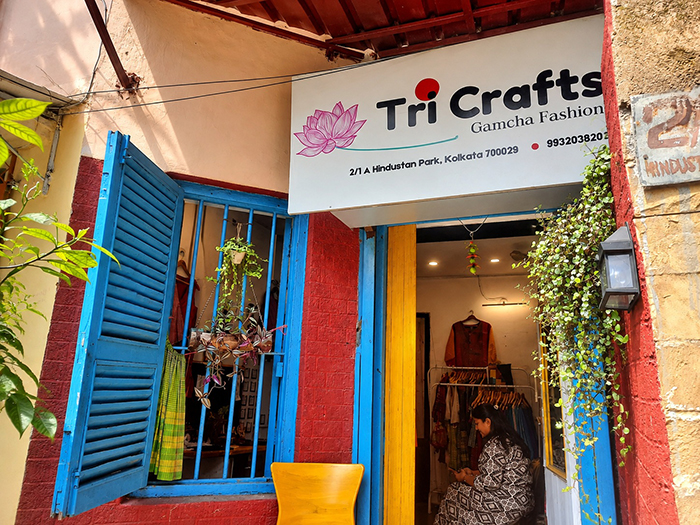
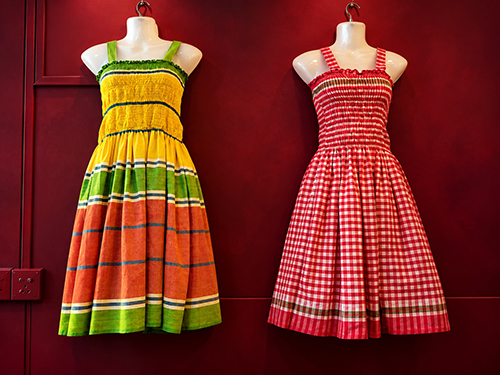
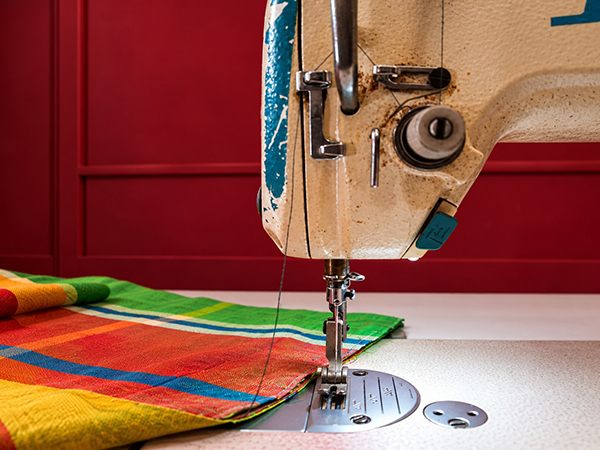
Outside, Kolkata is preparing for Puja. The city is filling with colour, lights, advertisements and hurried preparations. Inside her compact boutique, the drama is quieter. A sewing machine waits beside lengths of vivid cloth. Garments hang against painted walls. Checks, stripes, reds, greens, yellows and blues compete for attention. A plant grows from a pot wrapped in scraps of fabric. Everything seems to suggest movement.
At the centre of it all is the gamcha.
For generations, it has been an everyday object in Bengal: practical, inexpensive and familiar. Trie has looked at it differently. Where others saw a towel, she saw possibility.
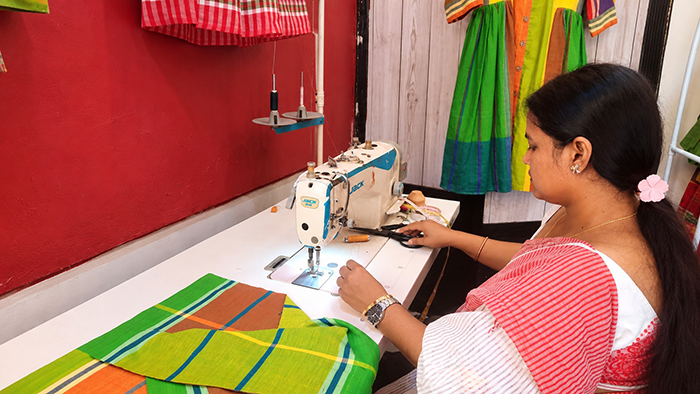
By the time we visited, Trie and her tailor, Karigor, Rupa di, were putting finishing touches to garments ordered before the festive season. It was not the polished machinery of a large fashion house. It was closer to an artist’s studio: intimate, improvised and intensely personal.
And perhaps that is precisely where the story begins.
The Artist Who Never Planned to Become a Designer
Trie did not study fashion. She studied philosophy and dance. Her original ambition was to remain a dancer.
“I never imagined myself doing this,” she says. “When I started, I did not know much about design. But I knew one thing very clearly: I knew how to learn.”
That sentence explains much about Tri Crafts.
There is no mythology of overnight success here. There is instead the slower story of an artist figuring things out while trying to survive. She had ideas before she had the technical ability to execute them. People such as Abha di and Rupa di helped turn those ideas into physical garments.
Her artistic instincts, however, began much earlier.
As a child, she made lamps and puppets, played with soil, water and colours, listened to music and absorbed literature and dance. Her parents, she believes, unknowingly created the environment that made her an artist.
“An artist needs discipline,” she says. “You get up early, you practise, you work and you continue doing it consistently.”
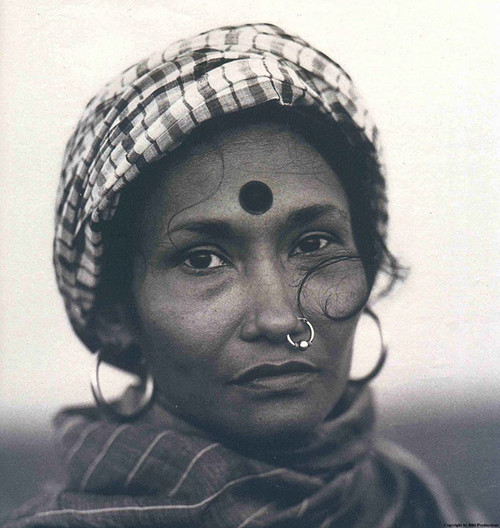
It is a useful philosophy for a struggling creative entrepreneur. Trie was heavily influenced by the works of fashion designer Bibi Russell. So, Inspiration may begin the journey, but discipline keeps the lights on.
When Did Gamcha Became a Possibility for Trie?
The turning point came partly through travel.
Around 2014–15, while travelling frequently to Bangladesh to learn dance, Trie noticed something that stayed with her. Gamchas appeared everywhere. They were worn as headbands, scarves and everyday protective clothing. They came in different colours, patterns and sizes.
She began wondering what else they could become.
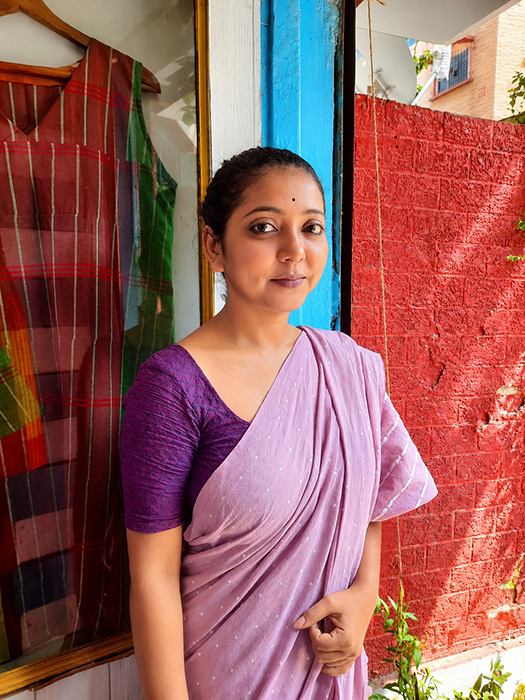
Back in Bengal, she started looking more closely at local textile traditions and the colours emerging from rural regions such as Beldanga and Murshidabad. She found a Bengal that was far more colourful than the familiar red-and-white visual shorthand often associated with it.
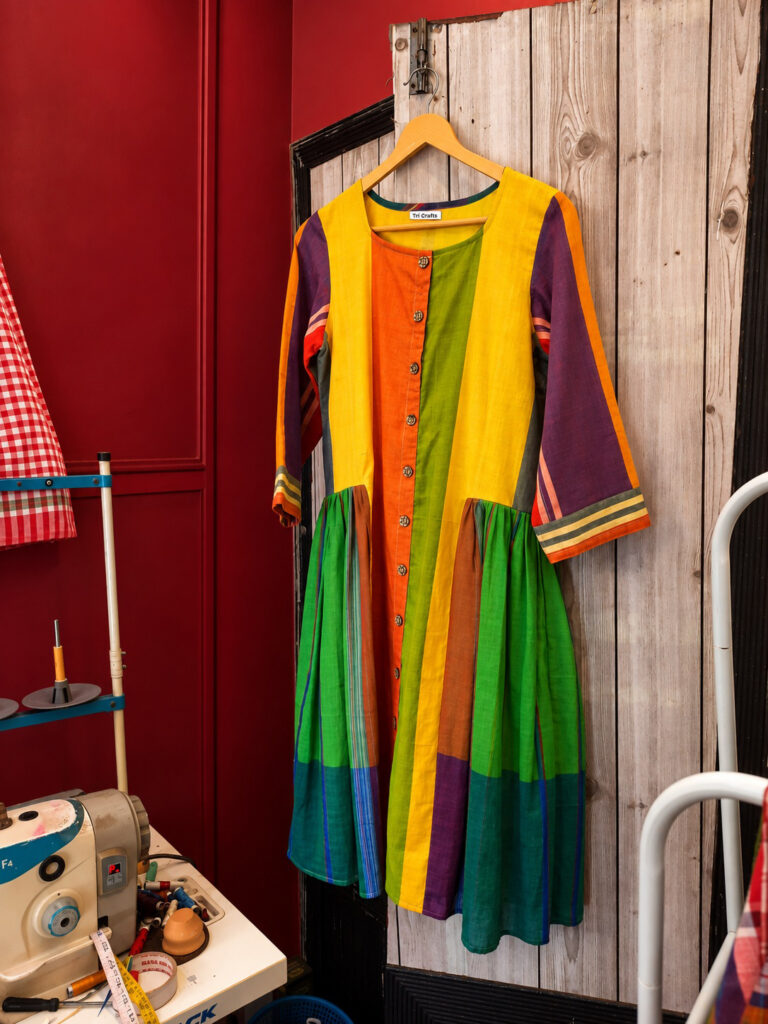
“I am personally very attracted to colour,” she says. “I feel that I can find a great deal of colour and inspiration in rural Bengal.”
Her approach to handmade clothing is therefore less about reproducing tradition and more about interrogating it.
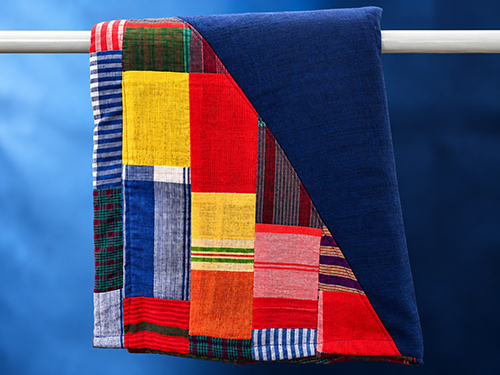
She cuts the gamcha. Joins it. Reconstructs it. Sometimes she uses leftover pieces to create something entirely different.
The material’s limitations become part of the design.
A traditional gamcha may be around 1.5 metres long, unlike a sari or a continuous roll of commercial fabric. That means Trie cannot simply approach it like conventional dress material.
“I have to think about what the material can become,” she explains.
Sometimes the answer is a sari, sometimes a dress, sometimes a bag or jacket. Sometimes the material forces her to abandon the original idea and begin again.
A Business Built Without a Business Plan
The irony is that Tri Crafts was not born from a sophisticated business strategy.
“I initially simply needed to do something to survive,” Trie says.
She did not have the money or technical knowledge to build a website. Marketing was unfamiliar territory. So she started with Facebook.
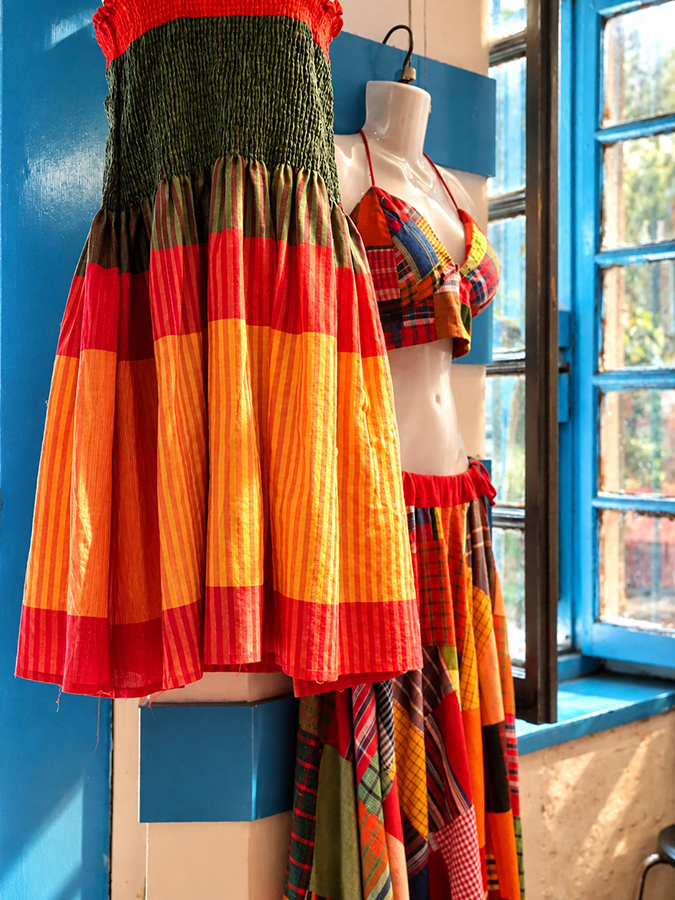
Then came the first order, from a woman named Surita living in Boston.
“That made me realise that this could actually work.”
It was a small beginning, but an important one. Social media gave an artist without a conventional fashion infrastructure access to customers beyond Kolkata.
Today, Trie says she has around 4,000 followers on one page and about 7,000 on another. Modest numbers by influencer-era standards, perhaps, but she sees the distinction differently.
“I have many genuine followers, and that matters more to me.”
That philosophy has shaped the brand. Tri Crafts has grown without the scale, advertising machinery or conventional corporate partnerships associated with mainstream fashion.
Fashion’s Big Market Meets the Small Studio
The timing is significant. India’s apparel retail market was estimated at about US$112 billion in FY2025 and is projected by CareEdge to approach US$193 billion by FY2030. The broader textile and apparel industry employs more than 45 million people, according to 2026 industry data.
Kolkata, too, is an active fashion market. Fashion and apparel accounted for 51% of the city’s retail leasing mix in 2024, while one industry estimate placed Kolkata at 11% of fashion-store footfall among leading Indian cities.
Yet Trie operates at almost the opposite end of that enormous commercial ecosystem.
Her work is slow.
A sari might take two days. Or nine days! Or two months!
“I have not yet found another sari exactly like one I have already made,” she says. “At first, I thought that was a problem. But now I see it differently. It is actually one of my strengths.”
That is perhaps the most compelling idea in Tri Crafts: imperfection becomes identity.
“Sustainability Beyond a Trend”
The rise of sustainable fashion gives Trie’s philosophy a larger contemporary context.
A 2021 Statista Consumer Insights survey found that 89% of Indian respondents surveyed said they bought sustainable or eco-friendly fashion, while 45% said they were willing to pay a much higher premium for fairly produced fashion. A separate 2023 Rakuten Insight survey found a majority of Indian respondents across age groups willing to pay more for sustainably produced or environmentally friendly products.
But Trie is cautious about reducing sustainability to a marketing word.
She dislikes throwing material away. Scraps are turned into new pieces. Gamcha can replace plastic in certain decorative applications. A piece that appears unusable can become another product through experimentation.
“For me, creativity means taking something small and finding a way to make it useful on a larger scale.”
That sentence could almost be Tri Crafts’ philosophy.
The Price of Making Things Slowly
There is, however, a difficult economic question beneath the beauty.
Mass-produced fashion can be cheap because it operates at enormous scale. A handmade garment cannot compete purely on price.
Trie has watched demand for her work increasingly comes from outside India. Yet consumers often struggle to pay for the labour embedded in handmade textiles.
“When prices increase, production can decrease,” she says. “And when production decreases, material costs can increase further. It becomes a cycle.”
This is where the romance of handmade clothing meets the reality of entrepreneurship.
An artist has to pay workers, buy materials, manage orders, find customers, experiment, fail, start again.
Trie does not pretend otherwise.
She Wants Gamcha Everywhere: Tri Crafts Leads
Her ambition is surprisingly simple.
She wants gamcha to become premium without ceasing to be ordinary.
“I want it to remain part of everyday life while also becoming something that people can proudly wear and display at offices, weddings and other important occasions.”
She does not want Tri Crafts to be confined to a narrow Bengali identity either.
“I want to represent Bengal through my work, but my clothing designs are universal.”
And perhaps that is why the brightly checked fabric works beyond nostalgia. It is not being preserved behind glass. It is being cut, stitched, worn and reinvented.
An Identity: Artist, Before Designer
Near the end of our conversation, Trie is asked how she would like to be remembered.
Her answer is immediate.
“As an artist.”
She wants to leave behind more than products. She wants people to develop an aesthetic sense in how they speak, walk, eat and live.
That is a much larger ambition than fashion.
In the small Golpark room, surrounded by sewing machines, scraps, colourful garments and the unmistakable geometry of gamcha, Trie seems to be pursuing something that large fashion systems often struggle to manufacture: meaning. The gamcha was never supposed to be glamorous. Trie simply asked what else it could become. And then, patiently, stubbornly and stitch by stitch, she began finding the answer.
Interview taken by: Debapriya Chakraborty & Rudranath Charkraborty
Images taken by the Writer